About

About this castle

A World Heritage castle built by Tokugawa Ieyasu, known as the place where the 15th shogun, Tokugawa Yoshinobu, consulted his retainers before returning power to the emperor. There is no keep, but the National Treasure Ninomaru Palace and the Ninomaru Garden, a Special Place of Scenic Beauty, tell the story of the rise and fall of the Tokugawa family and Japan's changing history.

Official website ↗
Visit

Admission & opening hours

Hours
  • Opening hours8:45–16:00 (castle closes at 17:00)
Closed
Dec 29–31 (Ninomaru Palace and Honmaru Palace have additional closing days)
Admission
  • Admission + Ninomaru Palace (general) ¥1,300
  • Admission only, general ¥800
  • Admission only, junior high/high school / elementary school ¥400 / ¥300
  • Honmaru Palace (advance reservation required) ¥1,000 (admission ticket required separately)
Access
  • The nearest station is Nijojo-mae on the Tozai Subway Line. From Kyoto Station, take the Karasuma Line to Karasuma Oike and transfer to the Tozai Line.

Fees and hours may change. Check the official website for the latest information before you go.

Book tickets & toursPR
History

History

Tokugawa Ieyasu built the castle in 1603. On October 13, 1867, Tokugawa Yoshinobu gathered senior retainers of the domains in Kyoto in the Ohiroma hall of Ninomaru Palace to hear their views, and the next day he offered to return political power to the imperial court (Taisei Hokan). The keep and Honmaru Palace were later lost, but Ninomaru Palace preserves its original appearance.

Highlights

Highlights

🏯 Ninomaru Palace (National Treasure)

The shogun's residence and office when visiting Kyoto, including the Ohiroma hall where the return of power took place. Photography is not allowed inside.

🏯 Ninomaru Garden (Special Place of Scenic Beauty)

A pond-style strolling garden facing Ninomaru Palace.

🏯 Honmaru Palace

The interior can be toured by advance reservation (separate fee from the admission ticket).

🏯 Wall and screen paintings

The original paintings that decorated the palace are shown at the Nijo Castle Painting Gallery on the grounds.

Seasons

Cherry blossoms, autumn leaves & events

Cherry blossoms and autumn leaves

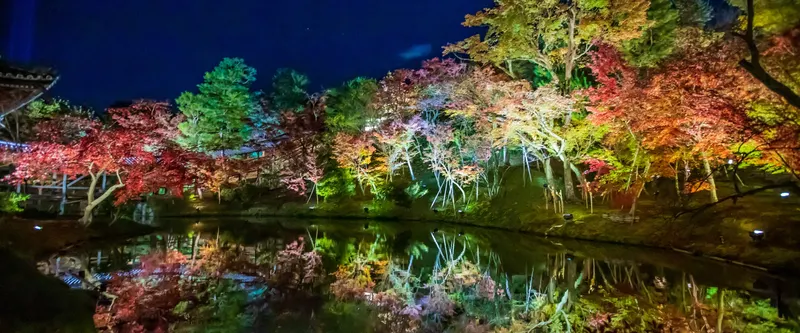
Enjoy the Nijo Castle Cherry Blossom Festival in spring and autumn foliage in fall. Dates and illumination details are announced on the official site each year.

Tips

Visiting tips

  • •To see Ninomaru Palace, buy the admission + Ninomaru Palace ticket. The admission ticket alone does not include the palace.
  • •Ninomaru Palace is closed on Tuesdays in January, July, August and December, among other days.
  • •Showing a subway one-day pass or similar gets you a discount on admission.
Etiquette

Etiquette

  • ✓Photos and videos are not allowed inside Ninomaru Palace and Honmaru Palace.
  • ✓Please refrain from using monopods or tripods, and do not fly drones.
  • ✓Socks are required inside Honmaru Palace to protect the cultural property.
Map

Map

🗺 Open in Google Maps ↗
Plan your trip

Plan your trip

Nearby

Nearby spots around Nijo Castle

Spots within about 20 km that are worth visiting at this time of year.

📍 Find more nearby on the map →
Where to Stay · Agoda

Places to Stay near Nijo CastlePR

Prices and availability are shown on Agoda.

Castles

More castles in Kansai

🏯 Original keep

Hikone Castle

Kansai ・ Hikone City, Shiga

🏅 National Treasure🖋 Castle stamps (gojoin)

The residence castle of the Ii family and a National Treasure with an original keep that has stood since the Edo period. Along with the keep, Important Cultural Property turrets, the Genkyu-en daimyo garden and the inner and middle moats remain as they were, and the castle is aiming for World Heritage status. Hikonyan, the popular mascot, appears on the grounds every day.
🏯 Original keep

Himeji Castle

Kansai ・ Himeji City, Hyogo

🏅 National Treasure🌏 World Heritage

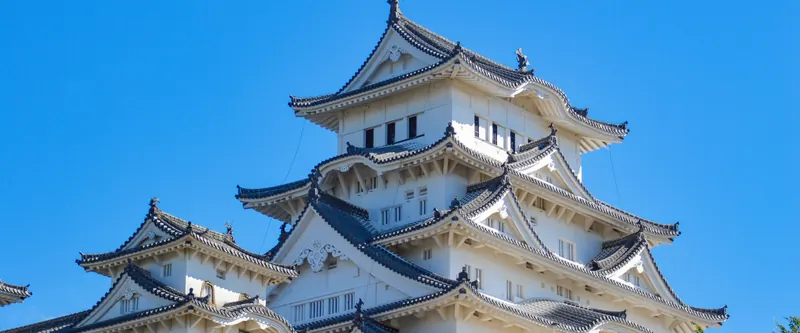
Also called the White Heron Castle for its beautiful white plaster walls, Himeji Castle has an original keep that has stood since the Edo period. It is a National Treasure, and in 1993 it became one of Japan's first UNESCO World Cultural Heritage sites together with Horyu-ji Temple. It is also known as the castle that escaped war and fire throughout its roughly 400-year history.

🏯 Reconstructed keep

Osaka Castle

Kansai ・ Chuo-ku, Osaka City, Osaka

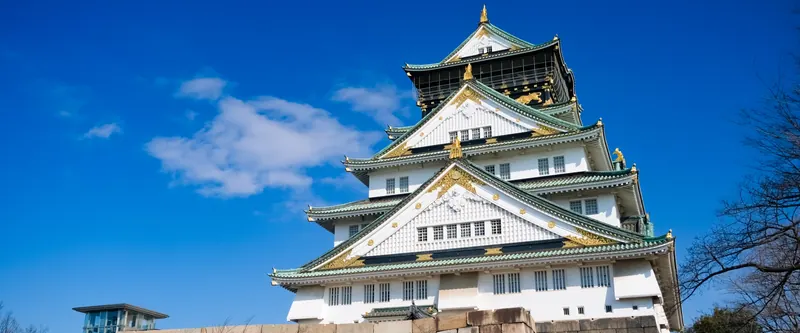
The symbol of Osaka, with roots in the castle built by Toyotomi Hideyoshi. Today's main keep was rebuilt in 1931 with donations from citizens; inside is a history museum, and the 8th floor is an observation deck overlooking the city. The surrounding Osaka Castle Park, with about 3,000 cherry trees, is one of the Kansai region's best cherry blossom spots.

Based on official websites and public tourism websites. Fees, hours and open areas may change.

Sources

Information checked: 2026-11-23