Sumo Basics

Watching Grand Sumo: The Basics

Seat types, how to buy tickets, how a tournament day unfolds and etiquette: what to know before your first visit to a sumo tournament.

Search by dates and destination

Grand sumo tournaments (honbasho) are the official competitions held 6 times a year, in odd-numbered months. January, May and September take place at Ryogoku Kokugikan in Tokyo, March in Osaka, July in Nagoya and November in Fukuoka, and every tournament runs for 15 days, from the opening day to the final day (senshuraku). Bouts run from morning to early evening, starting with the lowest-ranked wrestlers and working upward, until the top-division stars such as the yokozuna (grand champion) and ozeki (champion) appear at the end.

Seats

Seat types

  • Ringside seats (tamari-seki)

    The front-row seats right below the ring, where each person sits on their own floor cushion. Because wrestlers can come flying off the ring, these seats are limited to ages 16 and up, and eating, drinking, taking photos and using mobile phones are not allowed.

  • Box seats (masu-seki)

    Traditional seating where you sit on cushions in a square section of floor divided by metal pipes. Each box (1 masu) is shared by several people (4 people, according to the English information), and boxes are graded S, A, B, C and so on from front to back.

  • Chair seats (isu-seki)

    Stadium-style chairs, located on the 2nd floor at Ryogoku Kokugikan. They are graded S, A, B, C and so on from the front, and since you can buy them for just 1 person at a time, they work well for travelers in small groups.

  • Wheelchair seats

    These are limited in number and, as a rule, must be reserved in advance by phone. Each wheelchair user must be accompanied by 1 companion.

  • Kids' seats and senior seats

    These seats require that a child (ages 4–15) or someone aged 60 or over be part of your group. Conditions may vary by tournament, and the number of people is checked when you enter on the day.

Tickets

Buying tickets

  1. 1The official ticket site is Ticket Oosumo (チケット大相撲), which also has an English version (TICKET OOSUMO ENGLISH). Choose your date and seat type and apply online.
  2. 2Within Japan, you can also buy tickets through Ticket Pia, by phone (Ticket Oosumo's dedicated reservation line) or at the in-store terminals in 7-Eleven. Tickets bought online are printed out at a 7-Eleven.
  3. 3General sales open on each tournament's advance-sale start date, and online and at 7-Eleven you can buy any remaining seats until 17:00 on the day you attend.
  4. 4Seats that sell out in advance are not released as same-day tickets. How same-day tickets are handled at the venue box office is announced separately for each tournament, so check the ticket information for that tournament on the official website.
  5. 5The Japan Sumo Association asks fans not to buy tickets from resale sites such as viagogo, or from flea-market and auction apps. Tickets bought outside official channels may be refused at the entrance.
  6. 6Everyone aged 4 and over needs 1 ticket per person. If you forget or lose your ticket you cannot get in, so make sure to bring it.
Daily schedule

How a day unfolds

  1. around 9:00
    Doors open
  2. around 9:25
    Bouts begin, from the lowest division (jonokuchi) up to the third division (makushita). Pre-tournament entry bouts (maezumo) are also held from Day 3; from Day 13 onward, bouts start around 11:00
  3. around 13:00
    Shinjo shusse hiro, the introduction of newly promoted wrestlers (only on certain days, such as the middle day)
  4. around 14:15
    Ring-entering ceremony of the second division (juryo dohyo-iri)
  5. around 14:35
    Juryo (second division) bouts
  6. around 15:40
    Ring-entering ceremony of the top division (makuuchi dohyo-iri)
  7. around 15:55
    Yokozuna ring-entering ceremony (a yokozuna, wearing an ornate ceremonial apron called a kesho-mawashi, performs alone in the ring)
  8. around 16:10
    Makuuchi (top division) bouts. From just after 17:00, the komusubi, sekiwake, ozeki and yokozuna take the ring
  9. around 17:15
    Sanyaku soroibumi, a ceremonial stomp by the top-ranked wrestlers (final day only)
  10. around 17:55
    Bow-twirling ceremony (yumitori-shiki), after the day's final bout
  11. around 18:00
    Close of the day (uchidashi). On the final day, the awards ceremony follows

Times are approximate and may vary by day.

Etiquette

Etiquette

  • ✓Watch the tachiai (the moment the wrestlers charge into each other) quietly, and avoid standing up or moving around during a bout.
  • ✓In the ringside seats (tamari-seki) and box seats (masu-seki), do not touch or call out to the wrestlers, referees (gyoji) or ringside judges.
  • ✓Heckling, whistling and throwing things are prohibited. Please also refrain from insulting wrestlers or making unreasonable demands of them.
  • ✓Noisemakers (drums, whistles, trumpets and the like) and banners are not allowed. Cheering boards must be small enough not to stick out beyond your own seat, and held by one person.
  • ✓Using flashes or other lights that interfere with the bouts is prohibited, as is watching from aisles, stairs or entrances.
  • ✓In box seats, do not climb over the dividers or step into neighboring boxes, and do not exceed the box's capacity. Shoes must be removed in box seats and ringside seats.
  • ✓The entire venue is non-smoking; smoking is allowed only in the designated smoking areas.
What to bring

What to bring and wear

  • •Don't forget your ticket, either the QR ticket on your smartphone or a paper ticket. At Ryogoku Kokugikan you can re-enter once per day, and you show your ticket when you do.
  • •In box seats, you put your shoes and umbrella in the storage space behind your seat, so shoes that are easy to slip on and off are handy.
  • •Large suitcases and any bags that won't fit at your seat cannot be brought in. At Ryogoku Kokugikan you can use the coin lockers or the paid cloakroom.
  • •Bottles, cans, cooler boxes and floor chairs (zaisu) are not allowed. Drinks and food can be bought at the shops inside the venue.
  • •Spending the whole day makes for a long session, so it helps to plan your meals around the venue's food stands, or the chanko nabe (sumo wrestlers' hot pot) at Ryogoku Kokugikan.
Glossary

Sumo terms to know

Honbasho (official tournament)
The official tournaments that determine rankings and records, held 6 times a year for 15 days each.
Banzuke (ranking list)
The chart showing each wrestler's rank. Wrestlers move up or down according to their tournament results, and a new banzuke is announced before each tournament.
Yokozuna (grand champion)
The highest rank on the banzuke. Only a yokozuna wears the thick rope (tsuna) and performs his own ring-entering ceremony.
Ozeki, sekiwake, komusubi
The upper ranks just below yokozuna. Sekiwake and komusubi are also referred to together as sanyaku.
Makuuchi and juryo
Makuuchi is the top division and juryo is the division below it; their bouts take place in the late afternoon and early evening.
Makushita, sandanme, jonidan, jonokuchi
The divisions below juryo, whose bouts take place from the morning into the afternoon.
Shonichi, nakabi, senshuraku
The 1st day of a tournament is shonichi (opening day), the 8th day is nakabi (middle day), and the 15th and final day is senshuraku.
Dohyo-iri (ring-entering ceremony)
A ceremony in which juryo and makuuchi wrestlers enter the ring wearing ornate ceremonial aprons (kesho-mawashi); a yokozuna performs it alone.
Yumitori-shiki (bow-twirling ceremony)
A ceremony performed by a wrestler with a bow after the last bout of the day.
Kensho (prize money)
Prize money that companies and others put up on top-division bouts. Sponsor banners are paraded around the ring before the bout, and the winner receives the prize.
Tachiai (initial charge)
The moment at the start of a bout when the two wrestlers synchronize their breathing, rise and crash into each other.
FAQ

FAQ

Q.Can I buy tickets in English?

Yes. The official ticket site, Ticket Oosumo, has an English version where you can choose a date and seat type and apply.

Q.Can I buy tickets at the venue on the day?

Seats that sell out in advance are not sold on the day. Online and at 7-Eleven you can buy remaining seats until 17:00 on the day you attend, but same-day sales at the box office are handled differently for each tournament, so please check the official website.

Q.Do I have to go in the morning?

With a ticket, you can arrive at any time during opening hours. The popular top-division bouts are in the late afternoon, so if you arrive by around the juryo ring-entering ceremony (just after 14:00), you'll catch the highlights.

Q.Can I sit in the ringside seats with my children?

Ringside seats (tamari-seki) are limited to ages 16 and up. If you're with children, choose box seats, chair seats or kids' seats.

Q.Can I go outside and come back in?

At Ryogoku Kokugikan you can re-enter once per day. At other venues, follow each venue's guidelines.

Q.Can I take photos?

In the ringside seats, both photography and mobile phone use are prohibited. In any seat, please avoid flashes or other lights that interfere with the bouts.

Tournaments

Upcoming tournaments

Tickets on sale
Kyushu Basho

November 2026 Grand Sumo Tournament

📅 Sun, Nov 8 – Sun, Nov 22, 2026

📍 Fukuoka Kokusai Center · Hakata, Fukuoka

🎫 Tickets go on sale: Sat, Sep 19, 2026
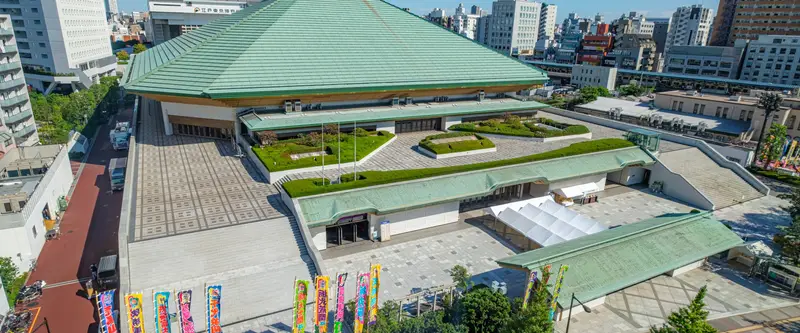
Tickets not on sale yet
Hatsu Basho

January 2027 Grand Sumo Tournament

📅 Sun, Jan 10 – Sun, Jan 24, 2027

📍 Ryogoku Kokugikan · Sumida, Tokyo

🎫 Tickets go on sale: Sat, Dec 5, 2026
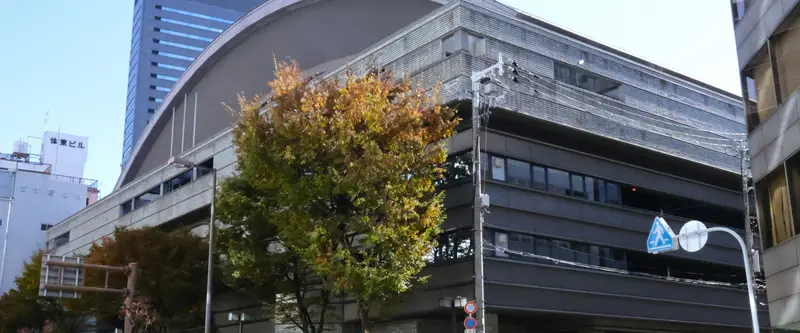
Tickets not on sale yet
Haru Basho

March 2027 Grand Sumo Tournament

📅 Sun, Mar 14 – Sun, Mar 28, 2027

📍 Edion Arena Osaka · Naniwa, Osaka

🎫 Tickets go on sale: Sat, Feb 6, 2027

Venues

The four tournament venues

Ryogoku Kokugikan

📍 Sumida, Tokyo

🚉 Ryogoku Station (JR Sobu Line, local trains) · about 2 min walk

Venue guide: Ryogoku Kokugikan

Edion Arena Osaka

📍 Naniwa, Osaka

🚉 Nankai Namba Station (Nankai Line) · about 2 min walk

Venue guide: Edion Arena Osaka
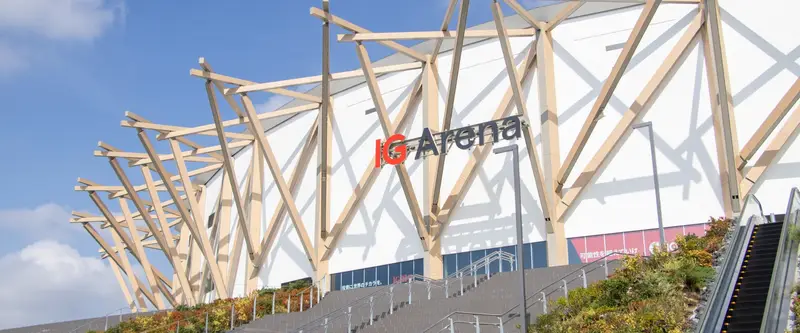
IG Arena

📍 Kita, Nagoya, Aichi

🚉 Meijo Koen Station (Nagoya Municipal Subway Meijo Line) · about 0 min walk

Venue guide: IG Arena

Fukuoka Kokusai Center

📍 Hakata, Fukuoka

🚉 Nishitetsu bus stop "Kokusai Center / Sun Palace-mae" · about 1 min walk

Venue guide: Fukuoka Kokusai Center

Dates, venues and directions are based on official information from the Japan Sumo Association, the venues, railway companies and local governments. Check each official site for the latest details.

Sources

Checked: 2026-10-16