
 February
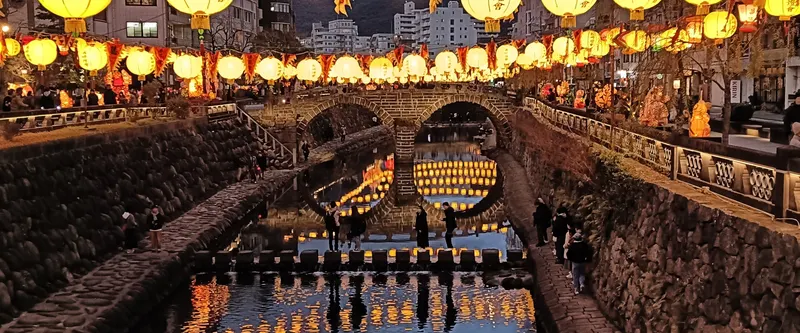
Nagasaki Lantern Festival
Kyushu ・ Nagasaki
Usually around February, at the time of the Lunar New Year (Spring Festival) (17 days from February 5 to 21 in 2027)
2027: Feb 5 (Fri) – Feb 21 (Sun), 17 days
Kyushu's lowlands are mild, with winter highs above 10°C even in Fukuoka and Kagoshima, but summers are hot and humid, with average August highs of 32.5°C in Fukuoka and 33.3°C in Kumamoto. The rainy season from June to mid-July brings very heavy rain, and typhoons are a concern, especially in August and September. Meanwhile, highland areas such as Aso and Yufuin are cooler than the lowlands and drop below freezing in winter. Yakushima is a very rainy island, with annual rainfall reaching 4,652 mm. This guide covers 10 areas popular with travelers, with monthly temperatures based on Japan Meteorological Agency climate normals, plus what to wear and what to see.
The coldest month of the year: the best season for hot springs
Plum blossoms peak at Dazaifu, plus the Nagasaki Lantern Festival
Cherry blossoms open late in the month as spring arrives
Cherry blossoms last into early April; warm, comfortable weather
Hakata Dontaku and fresh greenery; the rainy season starts in southern Kyushu at the end of the month
Rainy season brings very heavy rain, and Miyama Kirishima azaleas bloom in the mountains
Hakata Gion Yamakasa; full-blown summer after the rainy season ends
The hottest month of the year: the season for beaches and surfing
Watch out for lingering heat and typhoons: the peak time for typhoons to approach
Nagasaki Kunchi and clear autumn skies for sightseeing
Autumn leaves at their peak, and Takachiho's Yokagura night dances begin
Winter begins: the season for hot springs and Yokagura
Fukuoka high / low (climate normals).
Kyushu is a treasure trove of hot springs, from Beppu and Yufuin to Kurokawa Onsen, Ureshino Onsen and the sand baths of Ibusuki. The cold season is the best time to go, but Ibusuki's sand bath hall, Saraku, is open year-round.
The roughly 6,000 plum trees at Dazaifu Tenmangu are at their best from late January to early March. Cherry blossoms usually open around March 22 in Fukuoka and Kumamoto and around March 26 in Kagoshima, peaking from late March to early April.
In the mountains of Oita Prefecture, pink Miyama Kirishima azaleas usually bloom from early May to mid-June. They peak in the signature Kuju Mountains from late May to mid-June, perfect to combine with a hike through the fresh greenery.
Kyushu's signature festivals are the Nagasaki Lantern Festival, timed to the Lunar New Year; the Hakata Dontaku Port Festival on May 3–4; the Hakata Gion Yamakasa from July 1 to 15; and Nagasaki Kunchi from October 7 to 9. Mid-November to early February is the season for Takachiho's Yokagura night dances.
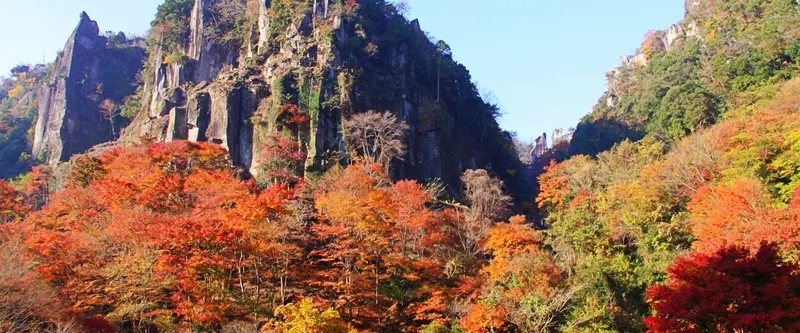
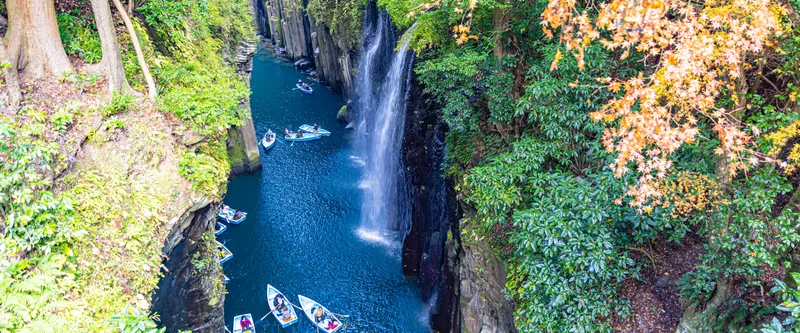
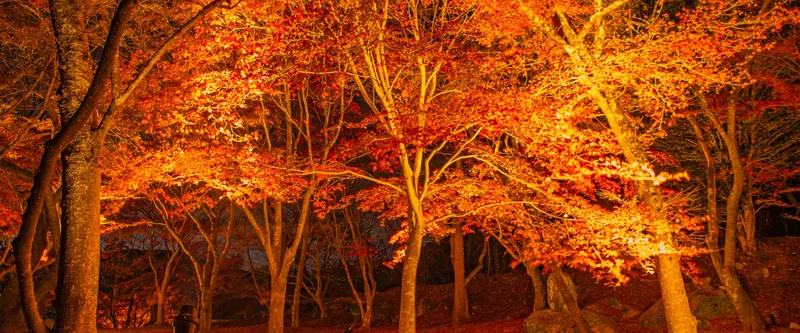
The colors peak at the Kokonoe Yume Grand Suspension Bridge in early November, and at Takachiho Gorge from early to late November. Gorges and highlands get chilly in the mornings and evenings, so bring a jacket.
Miyazaki's Aoshima Beach is usually open for swimming from early July to late August. You can surf Miyazaki's coast year-round, and from August, swells from offshore typhoons bring bigger waves in the high season.
Average temperature normals (°C). Blue is colder, deeper orange is warmer. Tap a month to see the full guide.
| Area | Jan | Feb | Mar | Apr | May | Jun | Jul | Aug | Sep | Oct | Nov | Dec |
|---|---|---|---|---|---|---|---|---|---|---|---|---|
| Fukuoka & Dazaifu | 6.9 | 7.8 | 10.8 | 15.4 | 19.9 | 23.3 | 27.4 | 28.4 | 24.7 | 19.6 | 14.2 | 9.1 |
| Nagasaki | 7.2 | 8.1 | 11.2 | 15.6 | 19.7 | 23.0 | 26.9 | 28.1 | 24.9 | 20.0 | 14.5 | 9.4 |
| Sasebo & Huis Ten Bosch | 7.0 | 7.8 | 11.0 | 15.3 | 19.7 | 23.0 | 26.8 | 28.0 | 24.8 | 20.0 | 14.4 | 9.2 |
| Karatsu, Arita & Ureshino Onsen | 4.5 | 5.6 | 8.9 | 13.8 | 18.4 | 21.9 | 26.0 | 26.6 | 22.8 | 17.2 | 11.5 | 6.4 |
| Kumamoto & Aso | 6.0 | 7.4 | 10.9 | 15.8 | 20.5 | 23.7 | 27.5 | 28.4 | 25.2 | 19.6 | 13.5 | 8.0 |
| Beppu & Yufuin | 6.5 | 7.2 | 10.2 | 14.8 | 19.3 | 22.6 | 26.8 | 27.7 | 24.2 | 19.1 | 13.8 | 8.7 |
| Takachiho | 3.7 | 5.0 | 8.4 | 13.2 | 17.6 | 20.9 | 24.7 | 25.0 | 21.8 | 16.2 | 10.6 | 5.4 |
| Miyazaki & Nichinan | 7.8 | 8.9 | 12.1 | 16.4 | 20.3 | 23.2 | 27.3 | 27.6 | 24.7 | 20.0 | 14.7 | 9.7 |
| Kagoshima, Sakurajima & Ibusuki | 8.7 | 9.9 | 12.8 | 17.1 | 21.0 | 24.0 | 28.1 | 28.8 | 26.3 | 21.6 | 16.2 | 10.9 |
| Yakushima | 11.8 | 12.3 | 14.6 | 17.8 | 21.0 | 23.7 | 27.0 | 27.5 | 25.7 | 22.2 | 18.2 | 13.9 |
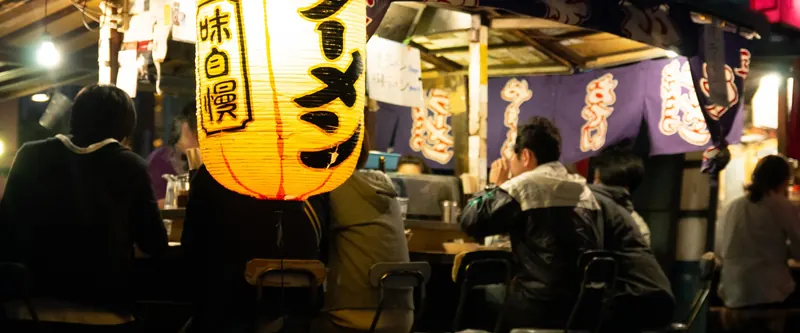
Fukuoka, Hakata, Tenjin, Dazaifu Tenmangu
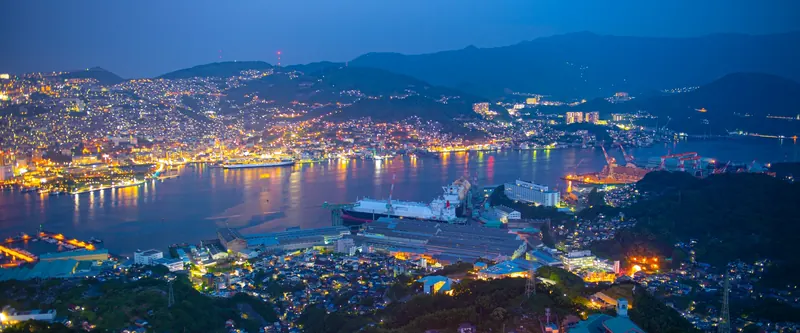
Nagasaki, Mt. Inasa, Glover Garden, Meganebashi Bridge
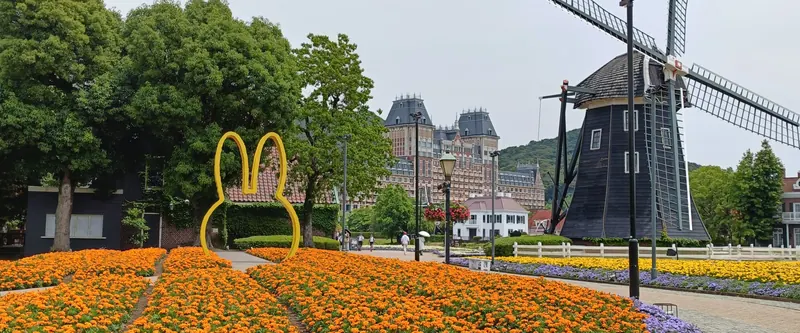
Sasebo, Huis Ten Bosch, Kujukushima Islands
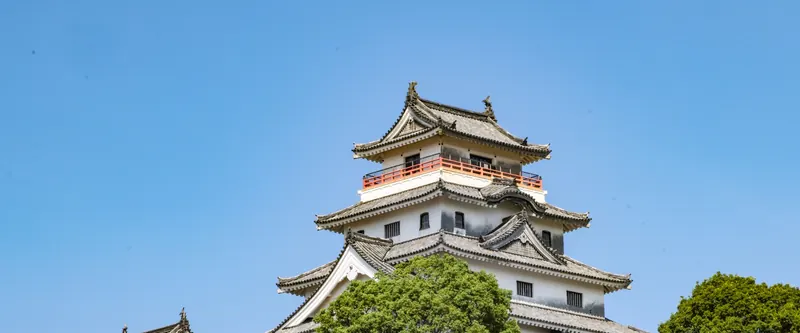
Ureshino Onsen, Karatsu, Arita, Imari
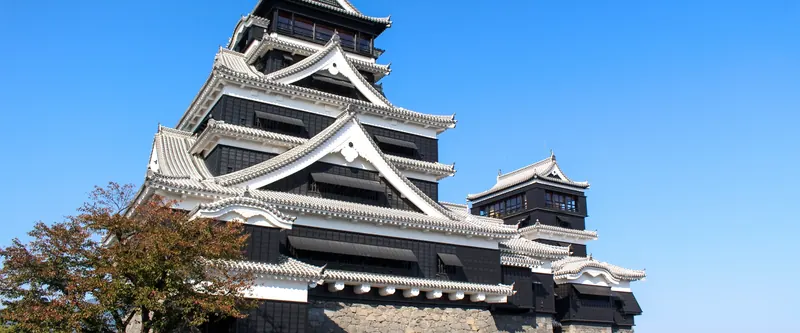
Kumamoto, Kumamoto Castle, Aso, Kurokawa Onsen
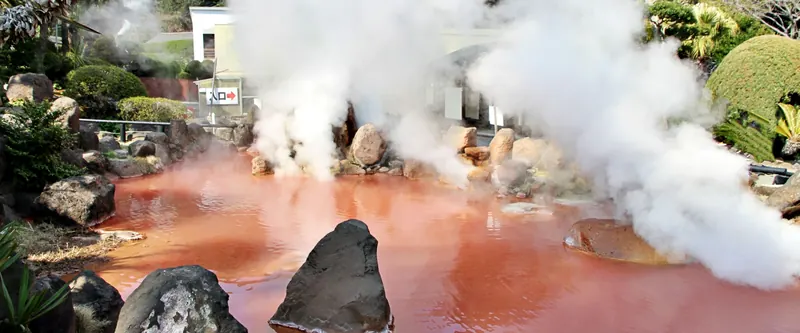
Beppu, Yufuin, Beppu Hells Tour, Mt. Yufu
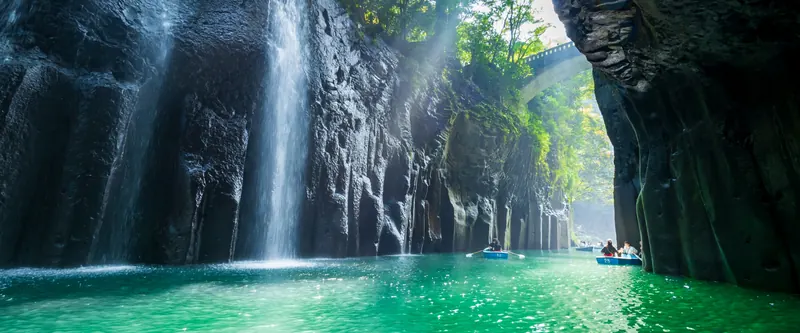
Takachiho, Takachiho Gorge, Takachiho Shrine, Amanoiwato Shrine
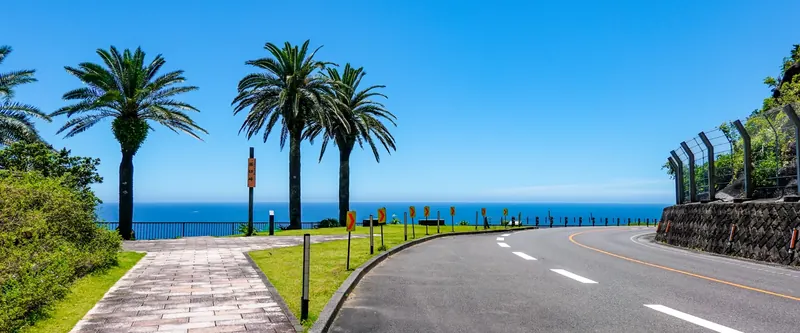
Miyazaki, Aoshima, Nichinan Coast, Udo Jingu
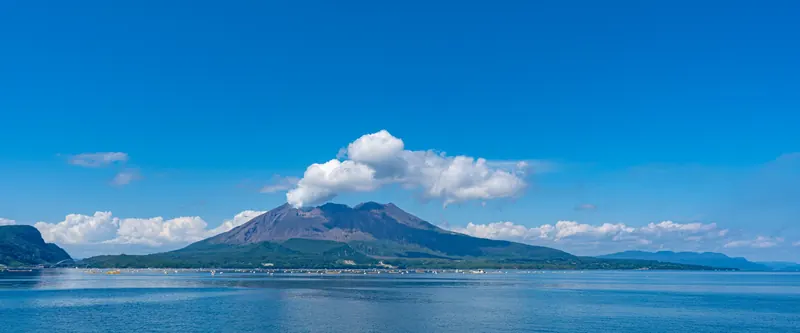
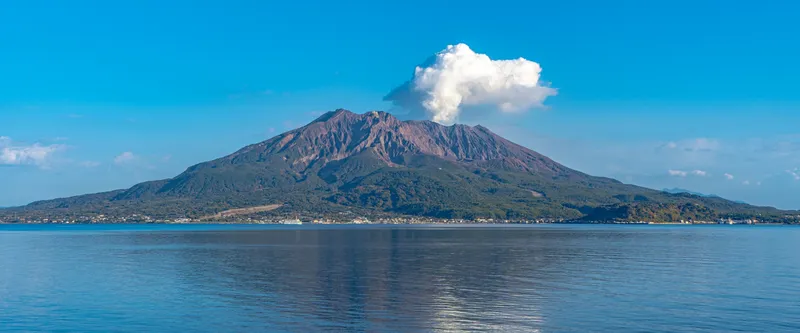
Kagoshima, Sakurajima, Ibusuki, Sengan-en
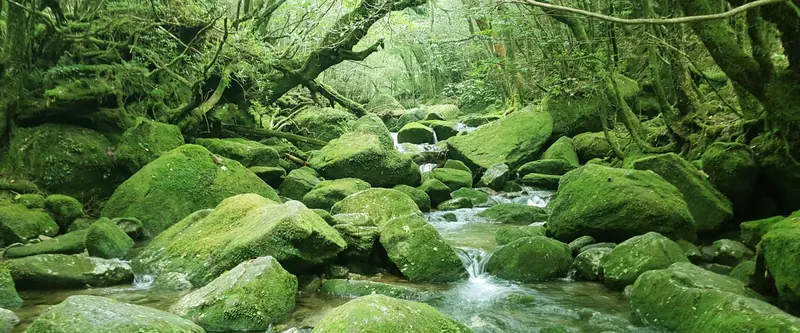
Yakushima, Shiratani Unsuikyo, Jomon Sugi, Yakusugi Land
Max snow depth is the normal for the snowiest month of the year.
FebruaryKyushu ・ Nagasaki
Usually around February, at the time of the Lunar New Year (Spring Festival) (17 days from February 5 to 21 in 2027)
2027: Feb 5 (Fri) – Feb 21 (Sun), 17 days
 April–May
 May
Kyushu ・ Fukuoka & Dazaifu
Every year May 3 and 4 (eve festival on May 2)
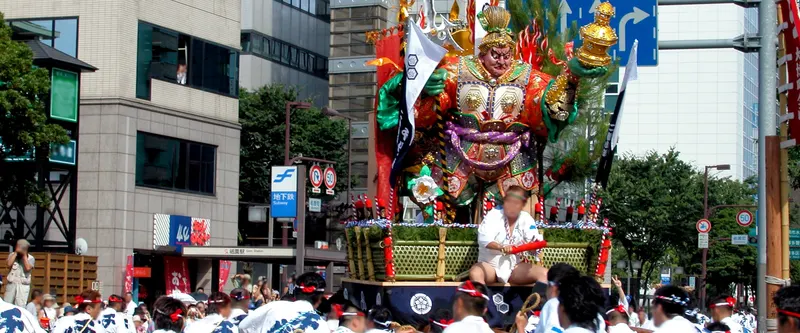 July
Kyushu ・ Fukuoka & Dazaifu
Every year July 1–15 (the Oiyama race starts at 4:59 in the early morning of the 15th)
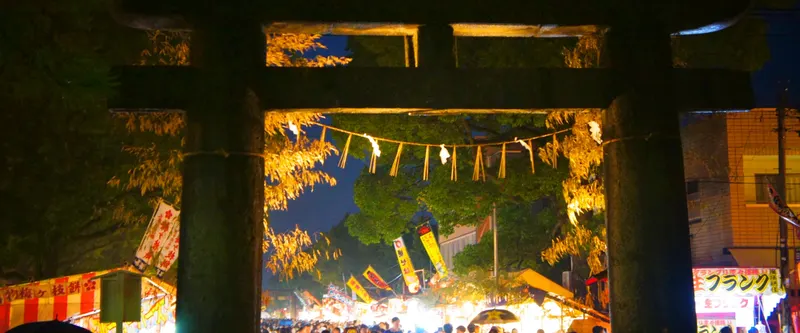 September
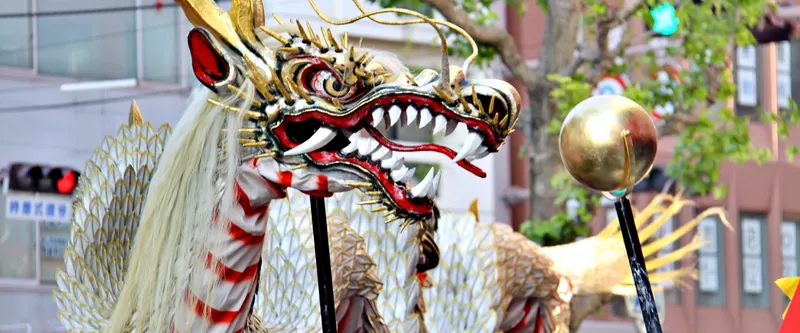 OctoberNovember–February
Kyushu ・ Sasebo & Huis Ten Bosch
Usually early November to late February
2026–27 season: Nov 6 (Fri) – Feb 25, 2027 (Thu)
 November–February
Kyushu ・ Takachiho
Usually mid-November to early February the following year (dates differ by village)
NovemberKyushu ・ Kagoshima, Sakurajima & Ibusuki
Every year November 2 (Yoru Matsuri) and 3 (Hon Matsuri)
2026: Nov 2 (Mon) Yoru Matsuri & Nov 3 (Tue, holiday) Hon Matsuri
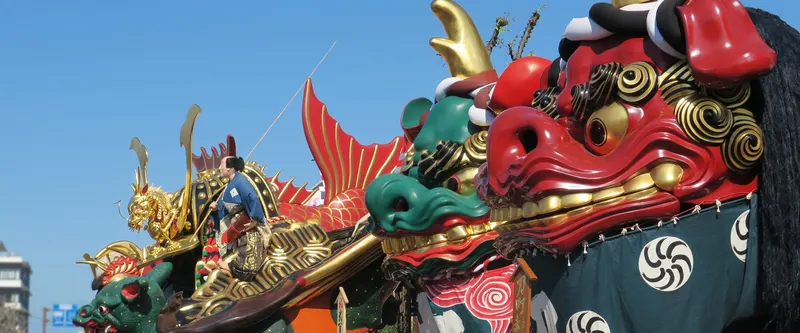 November
Kyushu ・ Karatsu, Arita & Ureshino Onsen
Every year November 2–4 (Yoiyama on the 2nd, Otabisho Shinko on the 3rd, Yokujitsu-sai town tour on the 4th)
2026: Nov 2 (Mon) – Nov 4 (Wed), 3 days
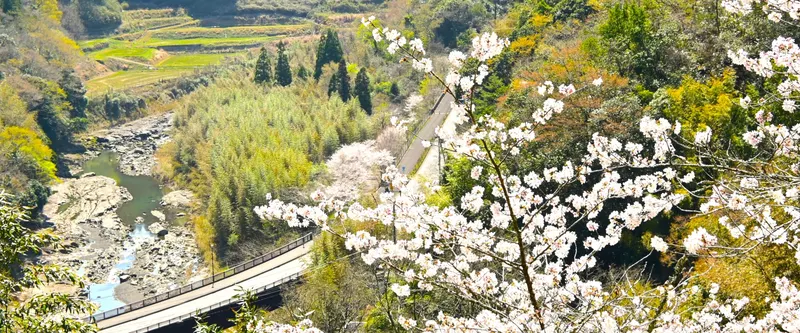 Castle
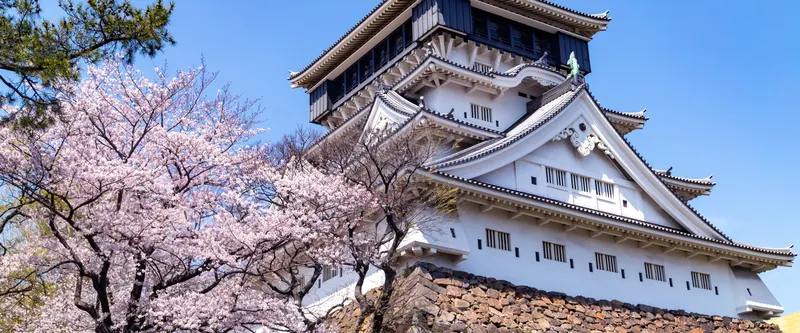 Castle
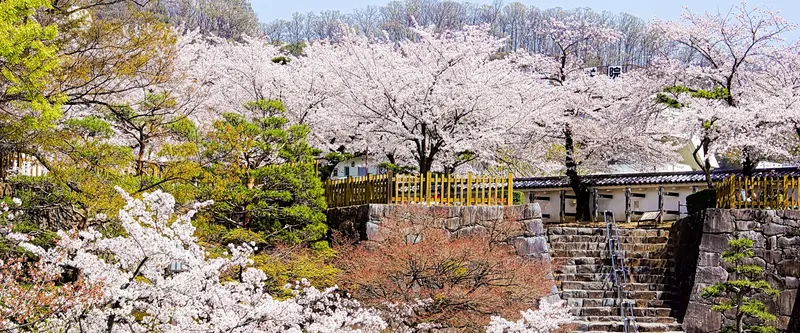 Castle
Kyushu ・ Fukuoka & Dazaifu
🌸 Typical peak: Late Mar – Early Apr
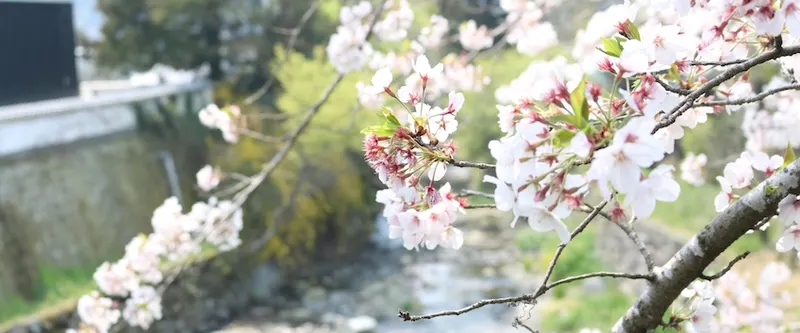 Avenue & old town
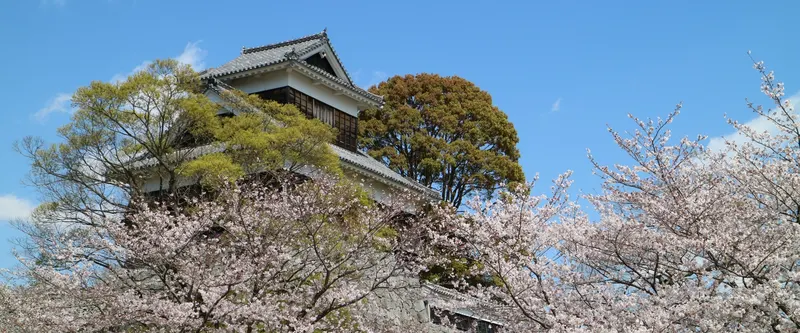 Castle
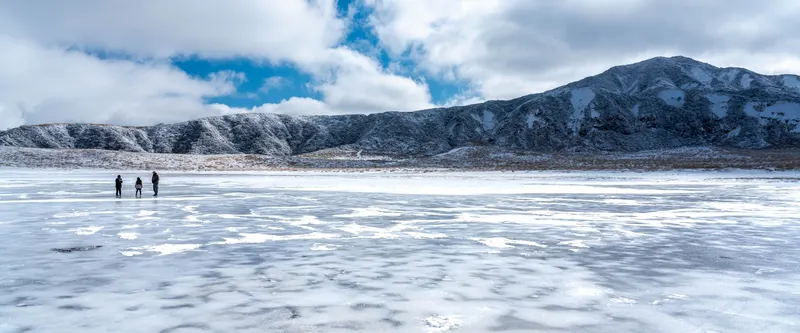 Rime ice
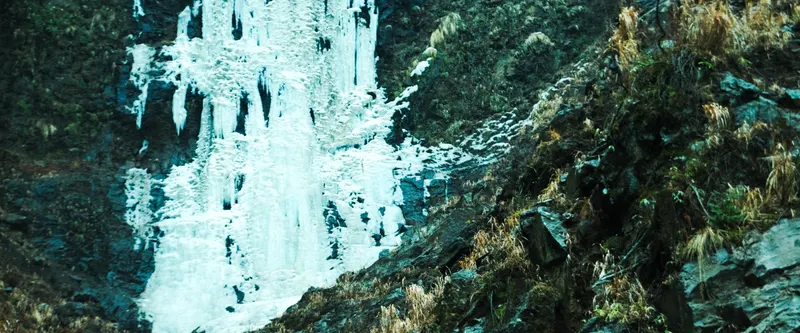 Frozen waterfall & icicles
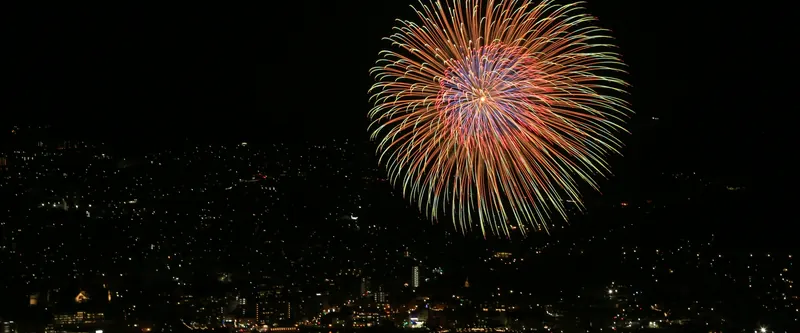 🎆 July
Kyushu ・ Nagasaki, Nagasaki
🎆 Usually in late July (July 25 (Sat) and 26 (Sun), 2026)
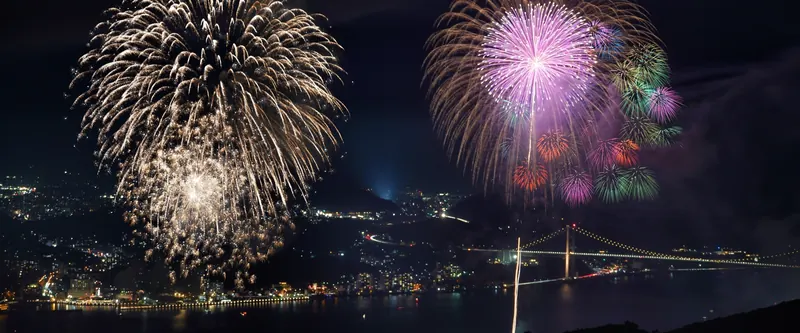 🎆 August
Kyushu ・ Moji-ku, Kitakyushu, Fukuoka
🎆 Usually mid-August (Thursday, August 13 in 2026)
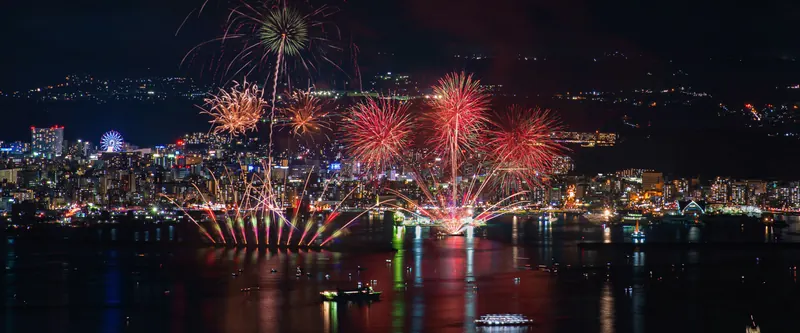 🎆 August
Kyushu ・ Kagoshima, Kagoshima
🎆 Usually late August (Saturday, August 29 in 2026)
 🎆 August
Kyushu ・ Oita, Oita
🎆 Usually in late August (August 29 (Sat), 2026)
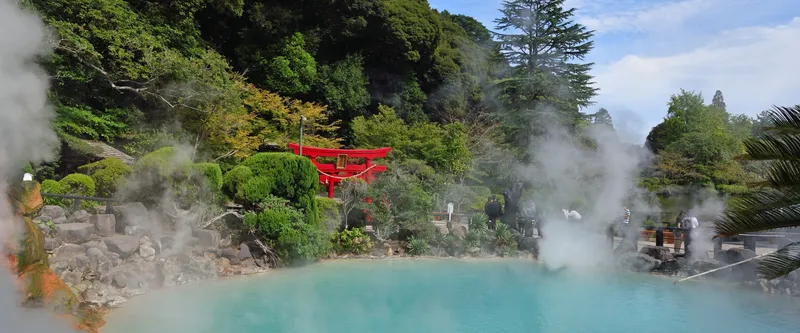 ♨ Onsen
Kyushu ・ Beppu, Oita
♨ Day use Regular bath: adults ¥300, children ¥100, preschoolers free / Sand bath: ¥1,500 (as of October 2026)
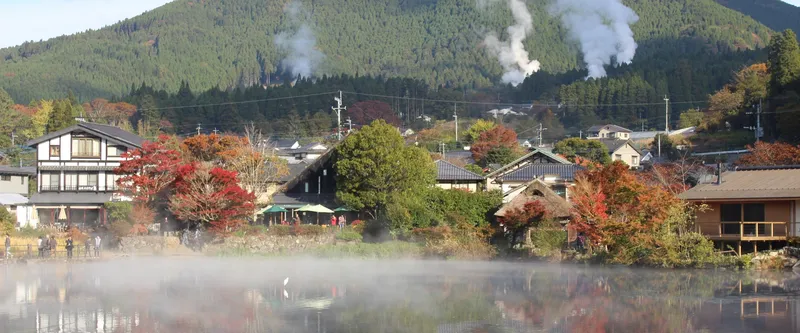 ♨ Onsen
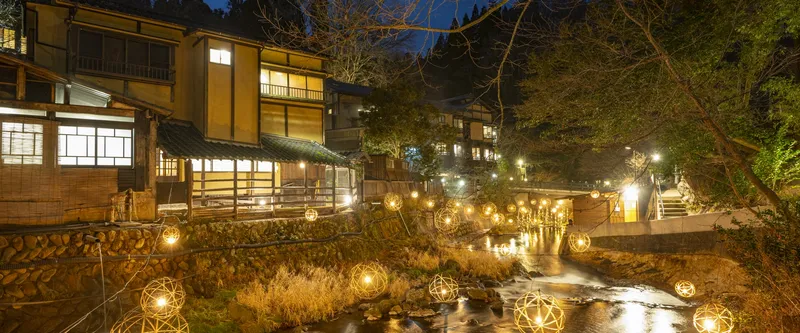 ♨ Onsen
Kyushu ・ Minamioguni, Aso District, Kumamoto
♨ Day use Adults ¥800, children ¥600 (as of October 2026)
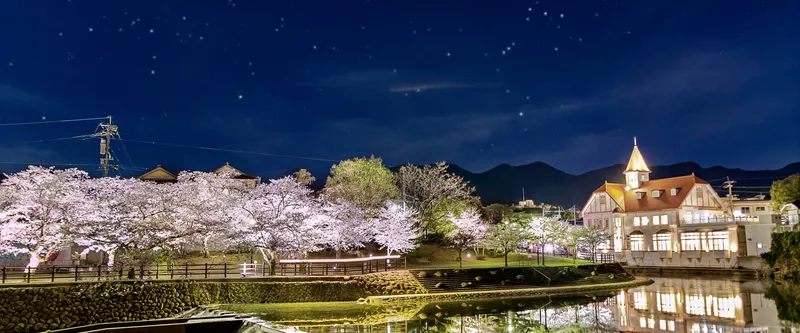 ♨ Onsen
Kyushu ・ Ureshino, Saga
♨ Day use Adults ¥450, elementary school students ¥220, preschoolers free with a guardian (as of October 2026)
 ♨ Onsen
Kyushu ・ Ibusuki, Kagoshima
♨ Day use Sand bath: adults ¥1,500, children ¥800 / Hot spring only: adults ¥800, children ¥400 (as of October 2026)
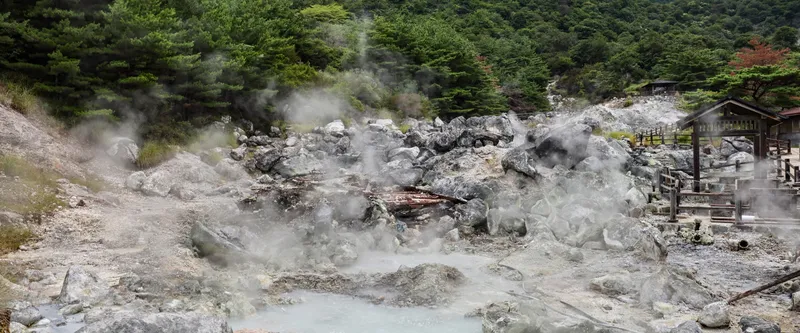 ♨ Onsen
Kyushu ・ Unzen, Nagasaki
♨ Day use Adults ¥500, children ¥250, age 3 and under free (as of October 2026)
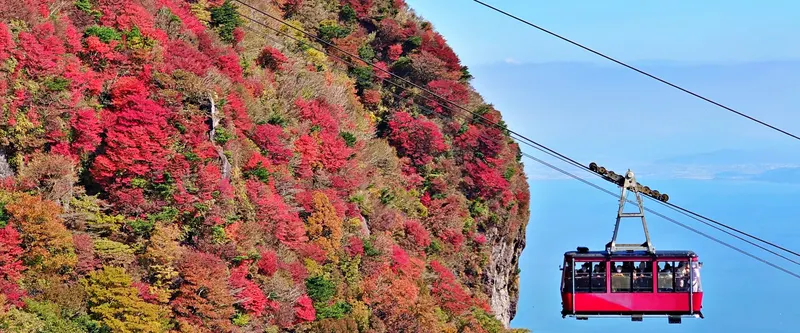 Mountain & highland🍁 Typical peak
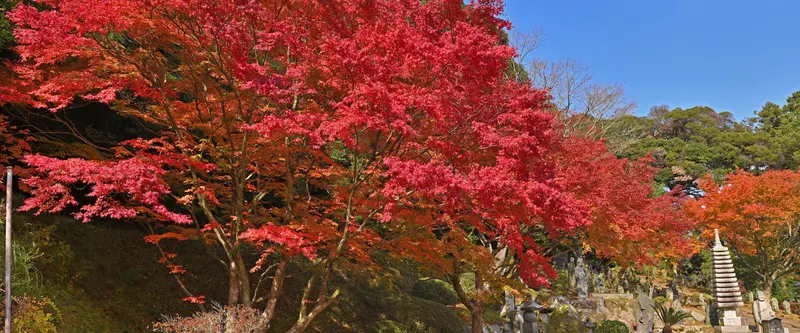 Temple
 Gorge
 GorgeTemple
 Shrine
 Zoo
Kyushu ・ Usa, Oita
A safari park in Ajimu, Usa City, Oita Prefecture, where you tour free-roaming animals by car or bus. You can explore in two ways: the My Car Safari, driving your own car through the Safari Zone with lions, elephants, and more, or the Jungle Bus, which moves along as you feed the animals. It's about 7 minutes by car from Beppuwan Smart IC, making it easy to combine with sightseeing in Beppu and Yufuin.
 Zoo
Kyushu ・ Kumamoto & Aso
A zoo in Aso City where you can interact with 350 animals of 60 species. It centers on animal shows and close-contact facilities with bear cubs, capybaras, and penguins. It's about 1.5 km from JR Aso Station, and highway buses between Kumamoto and Oita/Beppu stop in front of the park.
 Experience
Kyushu ・ Beppu & Yufuin
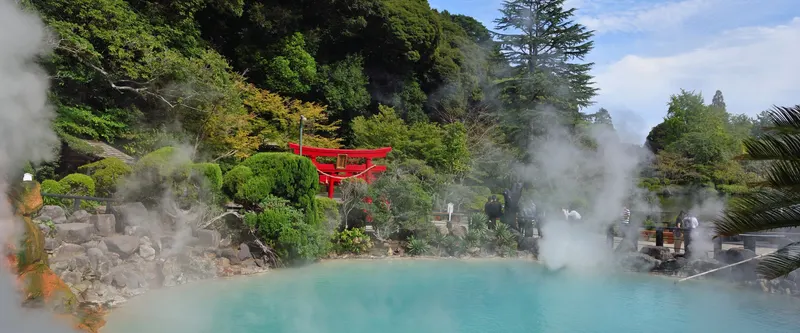
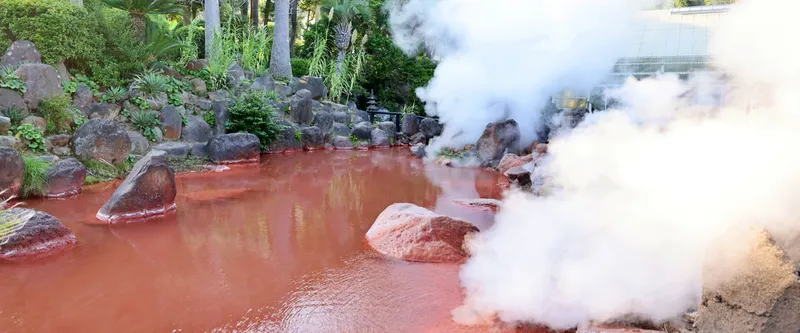
A Beppu sightseeing classic: touring the seven hot spring sources known as jigoku (hells) in the Kannawa and Kamegawa areas of the hot spring town of Beppu. The hells each differ in color and form, from the cobalt-blue Umi Jigoku and the red Chinoike Jigoku to Tatsumaki Jigoku, which erupts at regular intervals. A combined ticket covers all seven, and you can tour them in about 2.5 hours including travel.
 Theme park
Kyushu ・ Sasebo & Huis Ten Bosch
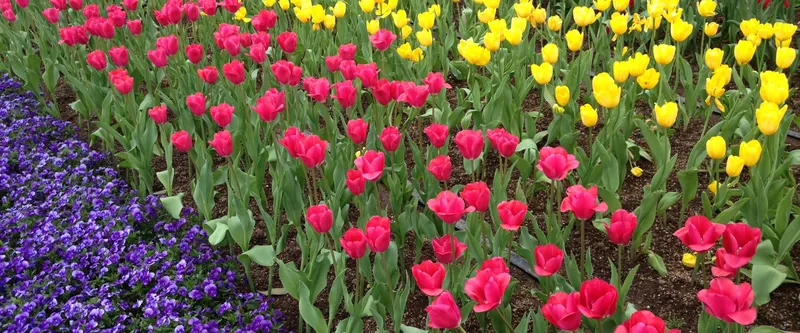
A theme park resort in Sasebo, Nagasaki Prefecture, recreating Dutch townscapes. Attractions, shops, restaurants, and hotels are spread across large grounds laced with canals. It's about a 5-minute walk from JR Huis Ten Bosch Station and about 1 hour 45 minutes by limited express from Hakata, so a day trip from Fukuoka is possible.
 Aquarium
Kyushu ・ Kagoshima, Sakurajima & Ibusuki
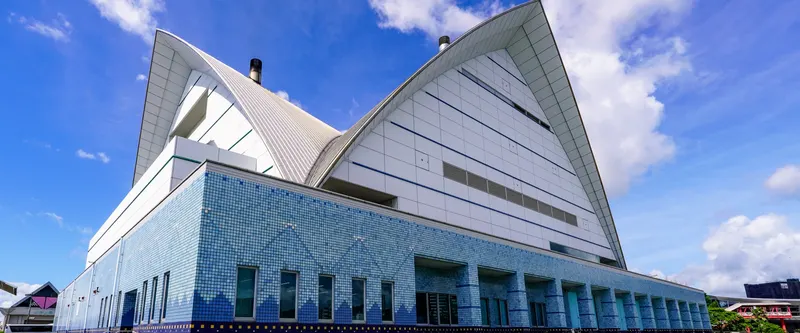
An aquarium in Honkoshin-machi, Kagoshima City, themed on Kagoshima's seas, from Kinko Bay to the Nansei Islands. It displays about 800 species, and the large Kuroshio tank with its whale shark and the dolphin programs are popular. It's about 15 minutes by streetcar from Kagoshima-Chuo Station, making it easy to drop by while sightseeing in the city.
 Aquarium
Kyushu ・ Sasebo & Huis Ten Bosch
An aquarium in Kujukushima Pearl Sea Resort in Sasebo. It focuses on sea life from the Kujukushima Islands, and its jellyfish exhibit and dolphin shows are popular. The Kujukushima sightseeing boat pier is in the same resort, so you can enjoy it together with a cruise.
 Aquarium
Kyushu ・ Fukuoka & Dazaifu
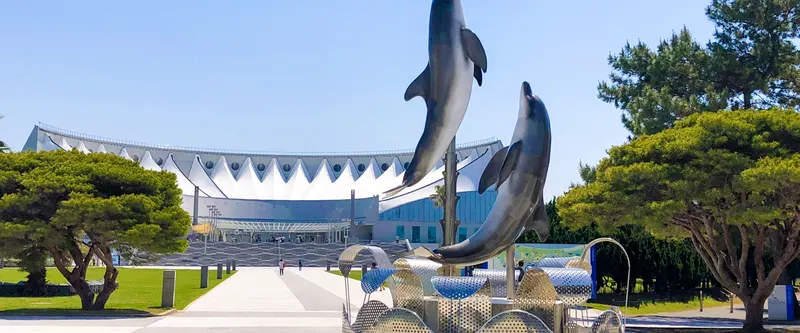
An aquarium themed on the seas of Kyushu, located at Uminonakamichi in Higashi-ku, Fukuoka City. It mainly shows sea life from the four seas surrounding Kyushu, and also holds dolphin and sea lion shows and a penguin parade. From Hakata Station it's one transfer by JR, and you can also get there by boat from Bayside Place Hakata.
 Aquarium
Kyushu ・ Nagasaki
An aquarium specializing in penguins, keeping 9 of the world's 18 penguin species. It's said to keep the most penguin species in the world and has one of Japan's largest penguin pools. Admission is an affordable ¥800 for adults, and it can be reached by bus from central Nagasaki.
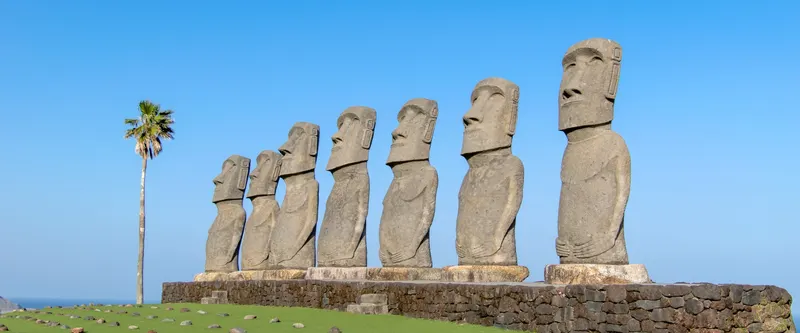 Botanical garden
Kyushu ・ Miyazaki & Nichinan
A park on a hill overlooking the Nichinan coastline, known for its seven Moai statues, reproduced with permission from the Council of Elders of Easter Island. The highlights are the Moai standing with their backs to the sea and the views across the spacious grounds. It's about 40 minutes by car from Miyazaki Airport and can also be reached by local bus from Miyazaki Station.
 Aquarium
Kyushu ・ Takasakiyama, Oita
An aquarium near Mt. Takasaki in Oita City, themed on becoming friends with animals. Performances by dolphins, walruses, and others are held many times a day, and you can get close to the animals. It can be reached by bus from Beppu Station and Oita Station, making it easy to combine with sightseeing in Beppu.
Compare trains, buses and taxis from the airport by travel time and fare.
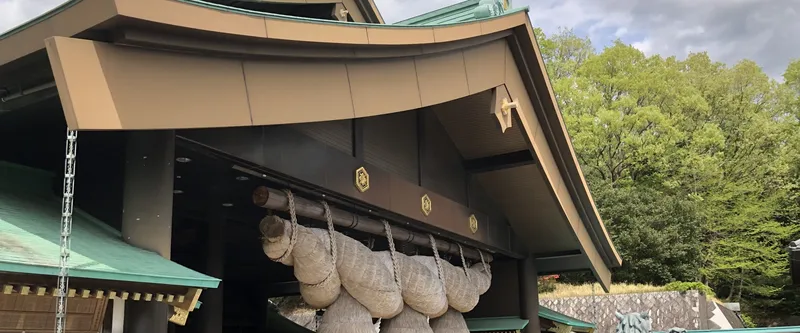 🚄 JR
Chugoku & Shikoku ・ 7 consecutive days (from 0:00 on the first day to 24:00 on the last day)
From ¥23,000
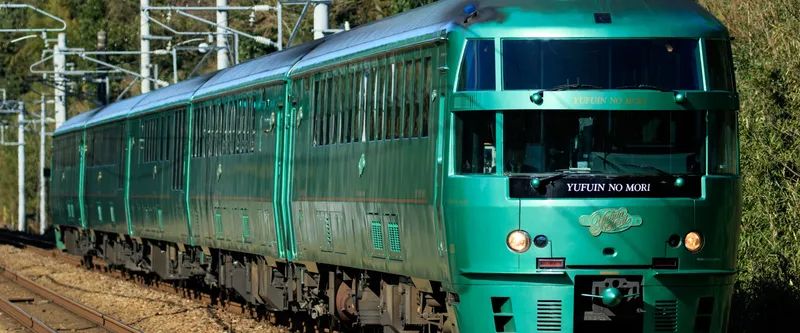 🚄 JR
Kyushu ・ 3, 5 or 7 consecutive days (Southern Kyushu is 3 days only; Northern Kyushu is 3 or 5 days)
From ¥22,000
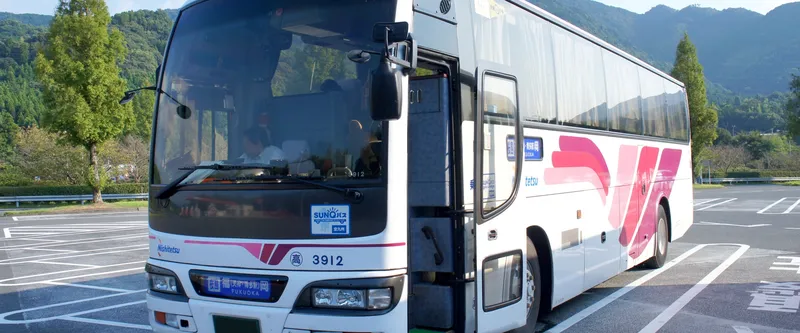 🚌 Bus
Kyushu ・ Paper passes are valid for 3 or 4 consecutive days. Digital passes: the 3-day pass covers any 3 days within 5 days from the start date, and the 4-day pass any 4 days within 7 days (each day runs from 3:00 to 26:59)
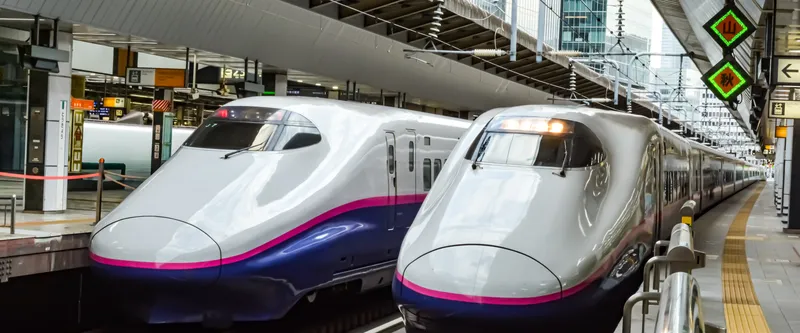 🚄 JR
Nationwide ・ Three types: 7, 14 or 21 days. The period of use cannot be extended or changed
From ¥50,000
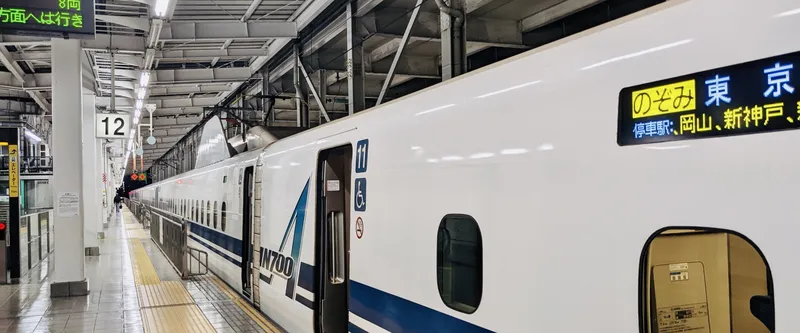
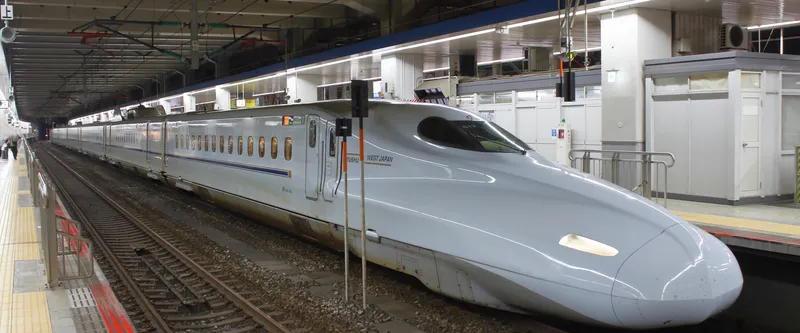
Fastest: About 2 hr 30 min (e.g. Mizuho No. 601 departs Shin-Osaka 6:00 → arrives Hakata 8:28)

Fastest: Fastest about 1 hr 20 min (including transfer time at Takeo-Onsen Station)

Fastest: Fastest 32 min (about 40 min on the Sakura)
Fastest: About 1 hr 20–35 min (e.g. Mizuho No. 601 departs Hakata 8:30 → arrives 9:53; Sakura No. 741 departs 9:06 → arrives 10:39)
For the most comfortable weather, we recommend April to May and October to November. For cherry blossoms, go from late March to early April; for autumn leaves, in November. The rainy season from June to mid-July brings lots of rain, and typhoons most often approach in August and September, so leave some slack in your plans at those times.
The lowlands are mild, with average January highs of 10.2°C in Fukuoka and 13.1°C in Kagoshima, and snow rarely settles. The highlands are a different story: January mornings drop below freezing, to -2.7°C in Aso (Aso-Otohime station) and -2.2°C in Yufuin (Yufuin station), so dress warmly and watch out for icy roads.
Average August highs are 32.5°C in Fukuoka, 33.3°C in Kumamoto and 32.7°C in Kagoshima, and the high humidity makes it feel muggy. The highlands are a little cooler, at 29.3°C in Aso-Otohime and 29.8°C in Yufuin. Take frequent breaks when sightseeing during the day.
In northern Kyushu (Fukuoka, Saga, Nagasaki, Kumamoto and Oita), the rainy season usually starts around June 4 and ends around July 19. In southern Kyushu (Miyazaki and Kagoshima), it starts around May 30 and ends around July 15. June rainfall in Kagoshima is 570.0 mm, making it the wettest time of the year.
Yakushima's average annual rainfall is 4,652 mm, about 2.8 times that of Fukuoka (1,687 mm). The mountains get even more rain and the weather changes quickly, so a two-piece rain jacket and pants are essential in any season. Snow can settle in the high mountains from December to February.
Source: Japan Meteorological Agency (climate normals 1991-2020). Compiled by tripuuu.log. Temperatures are from a representative station in each area; actual weather varies from year to year.