Power Spot · Chubu & Hokuriku

Izu Shirahama Shrine (Ikonahime-no-Mikoto Shrine)

📍 Shimoda, Shizuoka

Search by dates and destination
About

About this power spot

Standing by Shirahama Beach in Shimoda at the southern tip of the Izu Peninsula, this is said to be Izu's oldest shrine, with a history of more than 2,400 years. Its official name is Ikonahime-no-Mikoto Shrine. It enshrines a deity of matchmaking and childbirth and is famous for the vermilion torii standing on the seaside rocks. Shizuoka's official tourism site introduces it as a place to "receive a special power."

History

History

The main deity, Ikonahime-no-Mikoto, is the consort of Mishima Daimyojin, who is enshrined alongside her as Kotoshironushi-no-Mikoto. The Engishiki of the Heian period records that two shrines, Mishima Shrine and Ikonahime-no-Mikoto Shrine, stood here at Shirahama. The worship hall, built entirely of zelkova, dates from 1860, and the main sanctuary, built entirely of Japanese cypress, from 1922.

Highlights

Highlights

✨ Seaside torii

A vermilion torii standing on the rocks of Shirahama Beach behind the shrine. The view of the Pacific through the gate is the shrine's signature scene.

✨ Mime Benzaiten

A shrine on the grounds dedicated to the deity of matchmaking. For the special matchmaking prayer, you visit here first before going to the worship hall.

✨ Yakushi juniper (Byakushin)

A sacred tree said to be 2,000 years old, with Yakushi Nyorai (the Medicine Buddha) enshrined in its trunk. The shrine's juniper grove is a prefectural Natural Monument.

✨ White Dragon sacred tree

A sacred tree that is said to have lived 1,000 years and has kept standing for 1,300 years even after dying.

✨ Chinese parasol tree grove

A pure stand of Chinese parasol trees (aogiri) on the north side of the grounds, designated a national Natural Monument. It marks the northern limit of the tree's natural range.

✨ Main sanctuary and lookout

The main sanctuary sits at the top of the stone steps at the back of the grounds, with a lookout behind it.

🙏 Known for

The main deity, Ikonahime-no-Mikoto, is worshipped as a deity of matchmaking and childbirth. The shrine describes Mishima Daimyojin as a deity of commerce and fishing, Mime as a deity of matchmaking and the performing arts, Wakamiya as a deity of wisdom and prosperity, and Tsurugi-no-Miko as a deity of martial arts.

Based on information from the shrine or temple and official tourism sites.

Etiquette

Etiquette & things to know

  • ✓Bow once before passing through the torii, and avoid walking down the center of the approach.
  • ✓There is no offering box at the seaside torii, and the shrine asks visitors not to leave money there.
  • ✓The seaside torii is a popular photo spot, so take turns with other visitors when taking pictures.
  • ✓Depending on the tide and wave height, the rocks leading to the seaside torii may not be passable. Do not try to force your way.
Tips

Tips for your visit

  • •For the special matchmaking prayer, write names on the form (with the reading on the right), visit Mime Benzaiten, then place the form in the offering box at the worship hall. The next morning a priest offers it before the deity and prays.
  • •The annual grand festival on October 28–30 features the Hitachi fire festival, a Sanbaso dance offering and the Onbei-nagashi ritual.
  • •From Izukyu-Shimoda Station, take a Tokai Bus for about 10 minutes and get off at "Shirahama Jinja-mae"; the shrine is right there.
  • •The car park is run by Times, accepts card payment only, and is free for 40 minutes for worshippers (shrine notice as of August 2026).
  • •The amulet office is open 9:00–16:00 (hours may change by season).
Map

Map

🗺 Map ↗
Plan your trip

Plan your trip

Where to Stay · Agoda

Places to Stay near Izu Shirahama Shrine (Ikonahime-no-Mikoto Shrine)PR

Prices and availability are shown on Agoda.

Power Spots

More power spots for “Love & relationships”

⛩️ Shrine

Iwakiyama Shrine

Tohoku ・ Hirosaki, Aomori

💞 Love & relationships💰 Prosperity & business

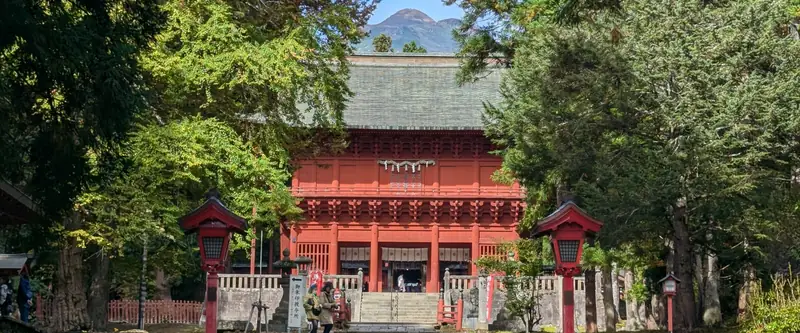
A shrine at the foot of Mount Iwaki, known as "Tsugaru Fuji," affectionately called "Oiwaki-sama" or "Oyama" by locals. Aomori Prefecture's official tourism site introduces it as a power spot rooted in mountain worship.
⛩️ Shrine

Dewa Sanzan (Mount Haguro)

Tohoku ・ Tsuruoka, Yamagata

💰 Prosperity & business🛡️ Safe travels💞 Love & relationships

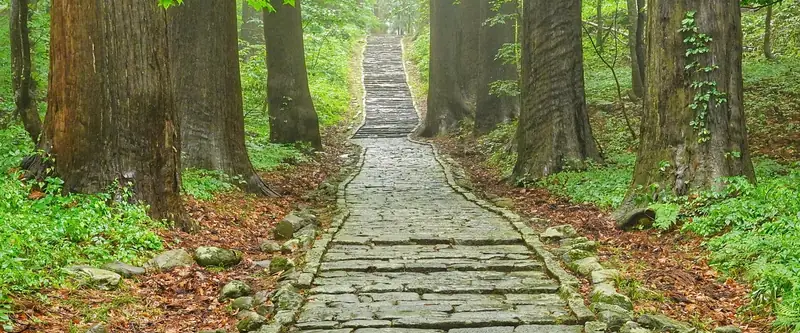
Together with Mount Gassan and Mount Yudono, Mount Haguro forms the "Dewa Sanzan" (Three Mountains of Dewa), a sacred site of mountain worship long known as a center of Shugendo ascetic practice. Tsuruoka City's tourism site introduces it as a power spot, and at the Sanjin Gosaiden hall on the summit you can pay respects to the deities of all three mountains at once.

⛩️ Shrine

Nikko Futarasan Shrine

Tokyo & Around ・ Nikko, Tochigi

💞 Love & relationships

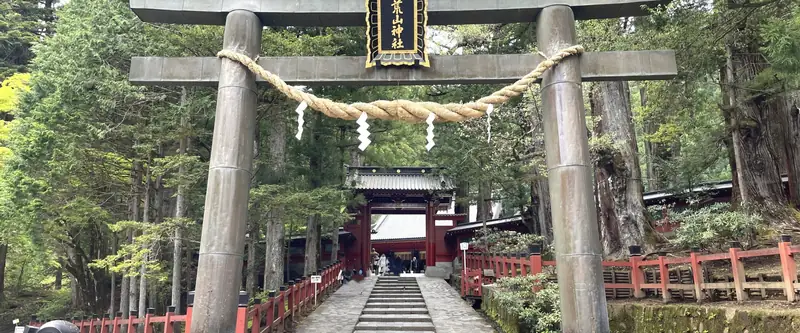
An ancient shrine that marks the beginning of worship on Mount Nikko, with Mount Nantai (Mount Futara) as its sacred body. It is one of the "Shrines and Temples of Nikko" World Heritage Site. Tochigi Prefecture's tourism site introduces it as a power spot where the deity of "victory" grants strength, and a Nikko City Tourism Association feature calls it a power spot popular with people hoping for a good match.

⛩️ Shrine

Tokyo Daijingu

Tokyo & Around ・ Chiyoda, Tokyo

💞 Love & relationships🍀 Good fortune & protection

A shrine near Iidabashi Station that enshrines the deities of Ise Jingu. It is known for blessings of matchmaking, and the official website of the Chiyoda City Tourism Association introduces it as a "Chiyoda power spot" bustling with visitors hoping for a good match.

⛩️ Shrine

Hakone Shrine

Tokyo & Around ・ Hakone, Ashigarashimo District, Kanagawa

🍀 Good fortune & protection🛡️ Safe travels💞 Love & relationships

Standing on the shore of Lake Ashi, this shrine has long been revered as "Kanto Soumoju Hakone Daigongen," the guardian deity of the Kanto region. Kanagawa Prefecture's tourism site introduces it as "Hakone's foremost power spot," surrounded by Lake Ashi, an avenue of old cedars and a pure stand of Japanese stewartia trees designated a Natural Monument.

⛩️ Shrine

Yahiko Shrine

Chubu & Hokuriku ・ Yahiko Village, Niigata

💞 Love & relationships

The Ichinomiya (highest-ranking shrine) of the former Echigo Province, standing in a deep forest with Mount Yahiko behind it, affectionately known as "Oyahiko-sama." Niigata Prefecture's official tourism site introduces it as "one of the prefecture's top power spots," and because it enshrines a married couple of deities, it is also popular as a power spot for love.

Power Spots

More power spots in Chubu & Hokuriku

⛩️ Shrine

Togakushi Shrine

Chubu & Hokuriku ・ Nagano, Nagano

🍀 Good fortune & protection📚 Study & exams💞 Love & relationships

A shrine made up of five shrines, Okusha, Chusha, Hokosha, Kuzuryusha and Hinomikosha, scattered at the foot of the sacred Mount Togakushi. Connected to the Ama-no-Iwato myth, it is introduced on the official tourism sites of Nagano City and Nagano Prefecture as "a power spot of myth and faith." The "Five Shrines Pilgrimage," walking along cedar-lined approaches to visit all five, is well known.

⛩️ Shrine

Shirayama Hime Shrine

Chubu & Hokuriku ・ Hakusan, Ishikawa

💞 Love & relationships🍀 Good fortune & protection🛡️ Safe travels

The head shrine of some three thousand Hakusan shrines across Japan, worshipping the sacred Mount Hakusan as its sacred body. Locals affectionately call it "Shirayama-san," and Ishikawa Prefecture's official tourism site introduces it, together with the shrine town of Tsurugi, as "the most powerful power spot in Hokuriku." The pure air of the main approach, surrounded by giant trees, is a big part of its appeal.

⛩️ Shrine

Hotaka Shrine

Chubu & Hokuriku ・ Azumino, Nagano

🛡️ Safe travels🍀 Good fortune & protection⛰️ Nature power spots

Made up of the main shrine in Azumino, the Okumiya (inner shrine) on the shore of Myojin Pond in Kamikochi, and the Minemiya (summit shrine) on the peak of Mount Okuhotaka, this shrine is known as the "chief guardian of the Japan Alps." Nagano Prefecture's official tourism site introduces it as a power spot, and the shrine's official website also describes the Myojin Pond area as a power spot. It is a place where the nature of the Northern Alps and faith are closely intertwined.

⛰️ Nature

Bungui Pass

Chubu & Hokuriku ・ Ina, Nagano

⛰️ Nature power spots

A mountain pass on the border between Ina City and Oshika Village, sitting directly on the Median Tectonic Line, one of Japan's largest fault lines. Known as a "zero magnetic field" spot, it is listed as a power spot on Nagano Prefecture's official tourism site as a place where the mind feels calm. Visitors come to spend quiet time at the "kiba" (energy spot) in the forest.

⛩️ Shrine

Fujisan Hongu Sengen Taisha

Chubu & Hokuriku ・ Fujinomiya, Shizuoka

🛡️ Safe travels

Standing at the foot of Mount Fuji, this is the head shrine of all Sengen shrines in Japan. It worships Mount Fuji itself as its sacred body, and Shizuoka Prefecture's official tourism site introduces it as a power spot. On the grounds, such as at Wakutama Pond where Fuji's spring water wells up, you can feel the blessings of the mountain up close.

⛩️ Shrine

Atsuta Jingu

Chubu & Hokuriku ・ Nagoya, Aichi

🍀 Good fortune & protection🛡️ Safe travels

An ancient shrine in the leafy "Forest of Atsuta" in southern Nagoya, affectionately known to locals as "Atsuta-san." It enshrines the Kusanagi sword, one of the Three Sacred Treasures of Japan, and Nagoya's official tourism site features it on a model power spot route. A deep forest spreads out here that feels far removed from the surrounding city.

History and what each place is known for are based on the shrine or temple’s official site and on local government and tourism association information. Opening hours, fees and limited-time items are not listed — please check the official site before you go.

Sources

Checked: 2026-11-11