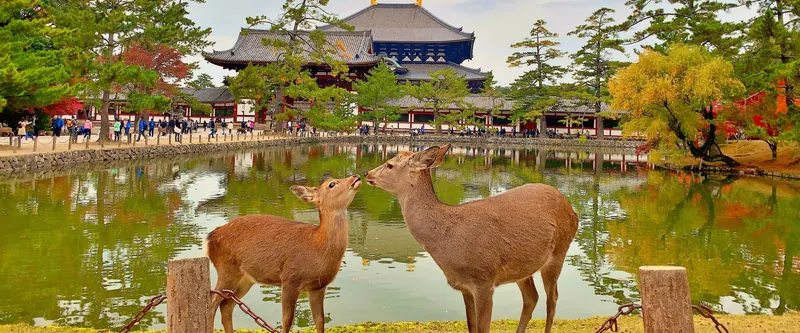

Event Guide · Kansai

Wakakusa Yamayaki

JanuaryNara
Search by dates and destination
Overview

Overview

A traditional Nara winter event in which the dry grass covering Mt. Wakakusa (about 33 ha), rising on the east side of Nara Park, is set alight all at once. Before the ignition, about 600 fireworks are launched, and Shinto rituals are held, including a torch procession carrying sacred fire from Kasuga Taisha Shrine. It takes place every year on the fourth Saturday of January.

When
Usually the fourth Saturday of January (fireworks from around 18:15 in the evening, ignition around 18:30)
Venue
Mt. Wakakusa (Nara Park), Tobihino, and other areas
Highlights

Highlights

About 600 fireworks lighting up the winter night sky, followed immediately by the whole of Mt. Wakakusa turning red with flames. Seeing the burning mountain together with the silhouettes of Nara's ancient temples and shrines is something only Yamayaki offers.

Times

Times

Daytime events10:30–14:00

Around the foot of Mt. Wakakusa and Kasugano Garden. 2026 example (Nara City Tourism Association)

Sacred fire receiving ceremonyFrom 16:45

At Kasuga Taisha. 2026 example

Torch procession departsFrom 17:05

About 40 people in period costume carry the sacred fire. 2026 example

Nogami Shrine ceremonyFrom 17:40

Nogami Shrine at the foot of Mt. Wakakusa. 2026 example

Grand fireworksFrom 18:15

About 600 shells. Canceled in severe weather. 2026 example (Nara Prefecture official)

Mountain burning — simultaneous ignition18:30

From the Nara Prefecture official page (2026 example)

Times can change from year to year. Check the official website for the latest information.

Tips

Tips for travelers

  • ✓The burning takes place at night (ignition at 18:30), but you can make a full day of it by combining it with daytime events such as the deer-cracker (shika senbei) flying contest and sightseeing at Kasuga Taisha and Todai-ji
  • ✓To see the fireworks overhead, go to the area at the foot of Mt. Wakakusa; to see the whole mountain in flames, try Ukigumo Garden or Kasugano Garden; and to avoid crowds, watching from farther away, such as the Heijo Palace Site, is another option
  • ✓In 2026, the area at the foot of the mountain and the rooftop of the Nara Park Bus Terminal became paid viewing areas (2,000 yen per person; free for preschool children accompanied by a guardian). Check official announcements for arrangements in future years
  • ✓The event is canceled in severe weather and is not postponed to a later date. Check Nara Prefecture's official information on the day to see whether it's going ahead
  • ✓The deer in Nara Park will approach looking for food, so don't leave food out in the open
Access

Getting there

Nearest stations
  • Kintetsu-Nara StationAbout 30 min on foot to the foot of Mt. WakakusaMany people walk through Nara Park
  • Todaiji Daibutsuden / Kasuga Taisha-mae bus stopAbout 12–15 min on foot to the foot of Mt. WakakusaCity loop bus from JR Nara Station and Kintetsu-Nara Station
From major stations
  • Osaka-Namba Station: Kintetsu Nara Line (Rapid Express) to Kintetsu-Nara Station (About 40 min)
  • Kyoto Station: Kintetsu Kyoto Line (Express or Limited Express) to Kintetsu-Nara Station (About 35–50 min)
  • JR Nara Station / Kintetsu-Nara Station: City loop bus to the Todaiji Daibutsuden / Kasuga Taisha-mae stop (About 10–15 min + walk)
IC cards (Suica etc.)
IC cards such as ICOCA and Suica can be used on Kintetsu, JR, and Nara Kotsu buses
Getting back
  • Road restrictions are in place around the area from 15:00 to 20:00, with vehicles completely barred from around 18:00 to 19:30 (2026 example). There is no dedicated parking, so come by public transport
  • After the ignition, bus stops and Kintetsu-Nara Station get very crowded, so walking from Nara Park to Kintetsu-Nara Station (about 30 min) is the reliable option
  • Nara Park has few streetlights and it's dark underfoot. A smartphone light or flashlight is handy
Open in Google Maps ↗
Crowds

Crowds & best timing

Busiest times
From 16:00 until just after the ignition. Usually about 30,000 people attend
Quieter times
During the daytime events, and at viewing spots away from the main area such as the Heijo Palace Site
Saving a spot
To secure a spot in a free area with a view of the whole mountain, arrive 1–2 hours before the fireworks (by around 16:00–17:00)
Time needed
The main part, from the fireworks to the burning, lasts about an hour (around 18:15–19:15). About 3 hours if you watch from the rituals onward
Weather

Weather & what to wear

Evening temperatures
Nara is cold in January, with a normal low of around 0°C (approximate figure based on JMA normals). Watching outdoors at night, it feels even colder
What to wear
Full midwinter gear: a down coat, gloves, a scarf, a knit hat, and disposable hand warmers. You'll be standing and waiting for a long time, so thick socks or insulated boots are recommended
Rain, snow & typhoons
The event may be canceled in severe weather (strong winds, heavy snow, etc.), with no postponement. It goes ahead in light rain (official Q&A)
Where to check for cancellations
Nara Prefecture official Wakakusa Yamayaki page, Wakakusa Yamayaki Executive Committee Office (0742-27-8677)
Etiquette

Local rules & etiquette

  • !Take your trash home. Don't leave trash behind, to prevent the deer in Nara Park from accidentally eating plastic bags and the like
  • !The deer are wild animals (a designated Natural Monument). Do not feed them anything other than shika senbei (deer crackers)
  • !Follow barrier lines and staff directions, and do not enter the restricted foot and slopes of the mountain
  • !Avoid using tripods and selfie sticks in crowded places
  • !When watching the rituals at Kasuga Taisha and Nogami Shrine, don't block the procession's path and watch quietly
  • !Public trash bins are rare in Japan. Bring a small bag and take your trash with you.
  • !Smoking while walking is banned in many cities. Use designated smoking areas.
Facilities

Facilities

Toilets
Public and temporary toilets in Nara Park get crowded before the ignition. It's a good idea to go around Kintetsu-Nara Station beforehand
Lockers & luggage
Coin lockers are available at Kintetsu-Nara Station and JR Nara Station. Leave large luggage at the station before heading out
Paying at food stalls
Some stalls are cash only, so bring cash
ATMs
Convenience store ATMs (Seven Bank, etc.) around Kintetsu-Nara Station
Seven Bank ATMs (inside 7-Eleven stores) usually accept cards issued overseas.
Wheelchairs & strollers
Nara Park has lots of grass, gravel paths, and slopes, and at night it is dark and crowded, making it hard going with a wheelchair or stroller
Food

Food

Local favorites
Kakinoha-zushi (sushi wrapped in persimmon leaves)Narazuke (pickles cured in sake lees)Miwa somen (thin wheat noodles, also served hot as nyumen)Warm snacks from the stalls
Vegetarian & halal
Vegetarian and halal labels are rare, so check ingredients at each shop
Tours & tickets for this eventPR
🏨 Where to stay during the event

Accommodation in Nara City tends to be busy on the night of the event. To avoid the crowds on the way back, book a stay in Nara City early, or allow plenty of time to return to Osaka or Kyoto

Where to Stay · Agoda

Places to Stay near Wakakusa YamayakiPR

Prices and availability are shown on Agoda.

Events

Events & festivals in Kansai

Photo coming soonJanuary–February

Kobe Luminarie

Kansai ・ Kobe & Arima Onsen

Usually about 10 days from late January to early February (lit from dusk to around 21:30)

2027 (32nd): Jan 29 – Feb 7
February

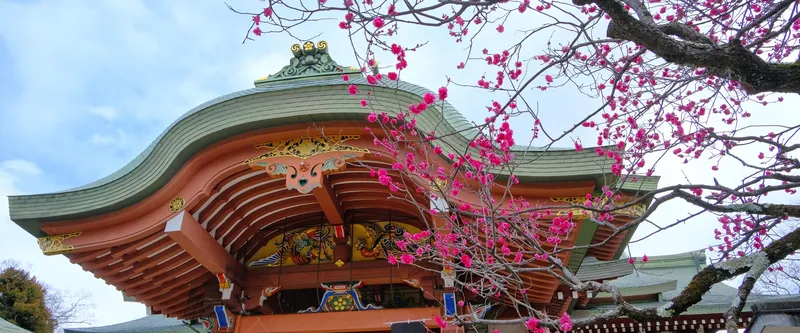
Baikasai (Plum Blossom Festival)

Kansai ・ Kyoto City

Every year on February 25 (outdoor tea ceremony 10:00–15:00)

Every year on February 25 (Feb 25 in 2027)
May

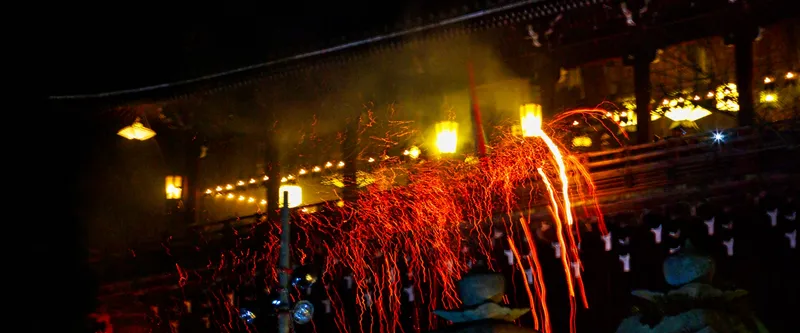
Aoi Matsuri

Kansai ・ Kyoto City

Every year on May 15 (postponed to the 16th if it rains; if it also rains on the 16th, the procession is canceled). Preliminary rites such as Yabusame horseback archery (May 3) and the Saio-dai purification ceremony (May 4) are held in early May

2027: May 15 (held every year on May 15; postponed to the 16th if it rains)
May–October

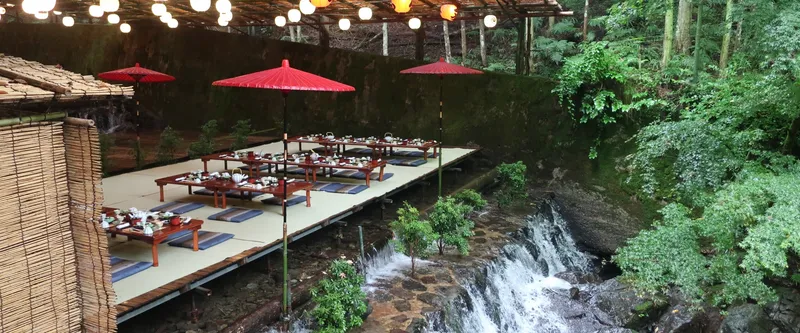
Noryo Yuka / Kawadoko (Kamogawa & Kibune)

Kansai ・ Kyoto City

Kamogawa Noryo Yuka usually runs May 1 – October 15, and Kibune Kawadoko usually runs May 1 – September 30 (season and hours vary by restaurant). In 2026, Kamogawa Noryo Yuka runs until October 15
July

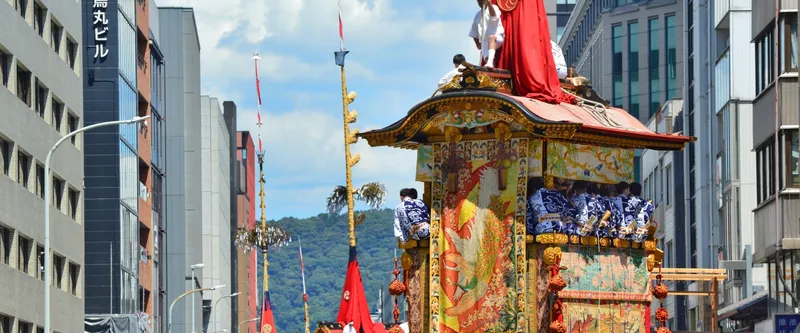
Gion Matsuri

Kansai ・ Kyoto City

Usually July 1–31 (Yamahoko procession: Saki Matsuri July 17, Ato Matsuri July 24; Yoiyama eves: Saki Matsuri July 14–16, Ato Matsuri July 21–23)
July

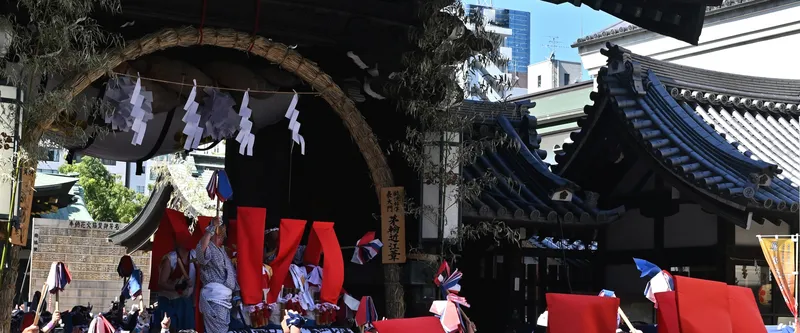
Tenjin Matsuri

Kansai ・ Osaka

Every year on July 24 (Yoimiya) and 25 (Hongu). Related events from late June

2027: Jul 24 (Yoimiya) & Jul 25 (Hongu) (held on the same dates every year)

Photo coming soonJuly

Nachi Fire Festival (Nachi no Ogi Matsuri)

Kansai ・ Shirahama & Nanki

Every year on July 14 (held during the day; Yoimiya offering events are also held the day before, on the 13th)

2027: Jul 14 (held every year on July 14)
August

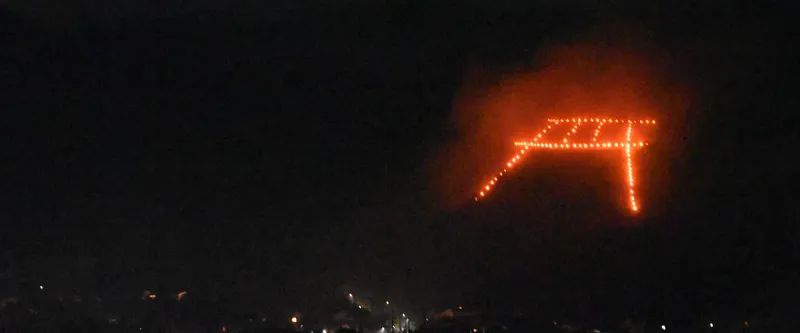
Koyasan Candle Festival (Mando Kuyo-e)

Kansai ・ Koyasan

Every year on August 13 (the candle festival runs from evening into the night; the Mando Kuyo-e memorial service starts at 20:00)

2027: Aug 13 (held every year on August 13)
September–October

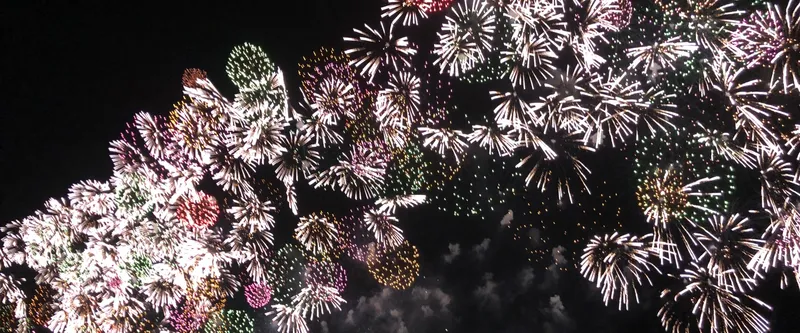
Kishiwada Danjiri Festival

Kansai ・ Osaka

The September festival is usually on a weekend in mid- to late September, and the October festival on a weekend in early to mid-October (2 days each)

Next: 2026 October festival (Higashi-Kishiwada district and others), Oct 10 – Oct 11. The 2026 September festival was held Sep 19 – Sep 20

Photo coming soonOctober–November

Annual Exhibition of Shōsōin Treasures

Kansai ・ Nara

Usually late October to early November (about 2–3 weeks)

2026 (78th): Oct 24 – Nov 9, open every day during the exhibition
October

Kanname-sai

Kansai ・ Ise & Shima

Usually October 15–17 (Geku first, then Naiku). Hatsuhobiki is usually on October 15 and 16

2026: Oct 15 – Oct 17 (Geku: night of Oct 15 – Oct 16; Naiku: night of Oct 16 – Oct 17)

Photo coming soonDecember

Kasuga Wakamiya On-matsuri Festival

Kansai ・ Nara

Usually December 15–18 (the Owatari-shiki starts at noon on December 17)

2026: Dec 15 (Tue) – Dec 18 (Fri); Owatari-shiki on Dec 17 (Thu)

Dates, times and access are based on official and other primary sources. Only dates confirmed by official sources are shown as “Confirmed dates”; otherwise the usual timing is given.

Last checked: 2026-09-30