Naha→
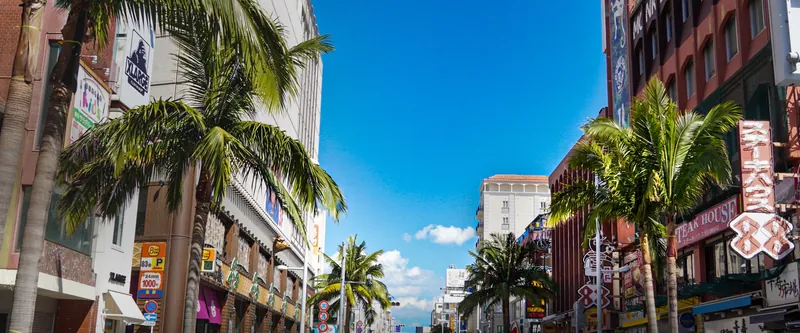
Station: NahaNaha, Kokusai-dori, Shurijo Castle, Naminoue Shrine
High
31.9℃
Low
27.0℃
- Precip.
- 188.1mm
- Sunshine
- 227h
- Sunset
- 19:24
Highs around 32°C. When walking around in the daytime, use shade and indoor spots
July in Okinawa is midsummer, with sunny day after sunny day. Naha's high is 31.9°C, and at night it only drops to around 27°C. It rarely goes above 35°C the way it does in mainland Japan's cities, but the sun and humidity are intense, and the sea glows emerald green at its most beautiful of the year. From the second half of the month, typhoons can approach, and tourist numbers rise with the summer holidays.
Temperature, precipitation and sunshine are climate normals (1991-2020). Sunset is for July 15.
Naha, Kokusai-dori, Shurijo Castle, Naminoue Shrine
Highs around 32°C. When walking around in the daytime, use shade and indoor spots
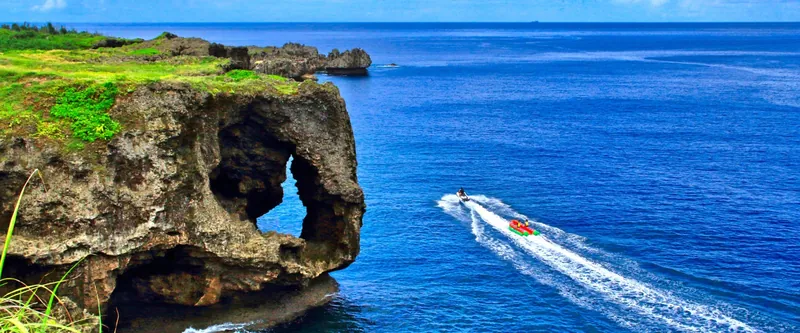
Onna, Cape Manzamo, Blue Cave, Chatan
Beach resorts are at their busiest. Snorkeling at the Blue Cave too
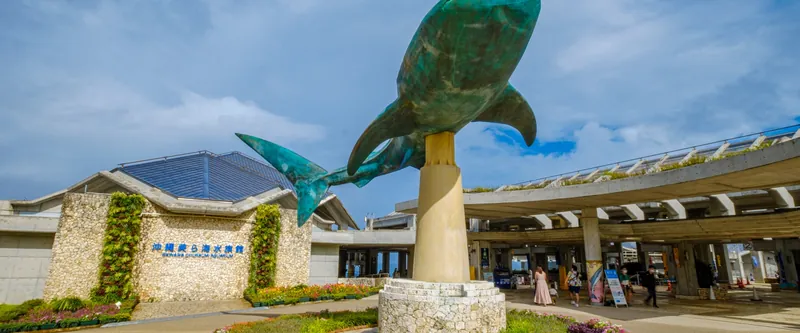
Churaumi Aquarium, Kouri Island, Sesoko Island, Nago
Highs around 32°C. The sea around Kouri Island and Sesoko Island sparkles
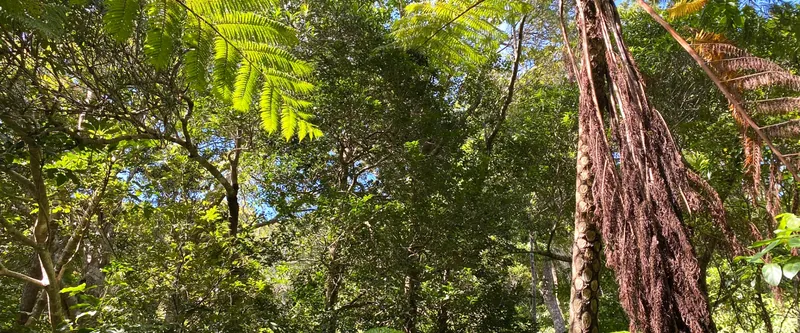
Kunigami, Cape Hedo, Daisekirinzan, Hiji Falls
Highs around 31°C. Cool off with river play or canoeing
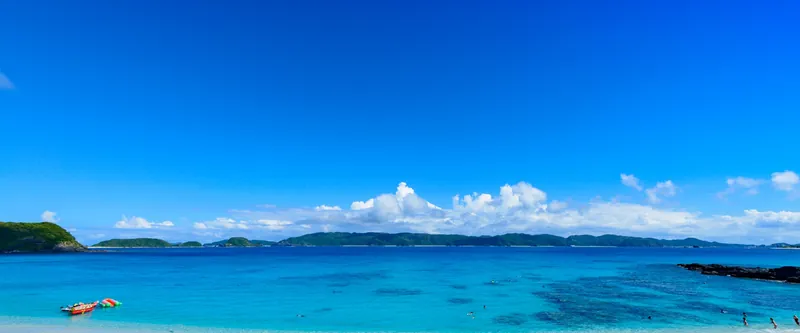
Tokashiki Island, Zamami Island, Aka Island
Highs around 29°C: slightly cooler out on the sea. Waters where you can meet sea turtles
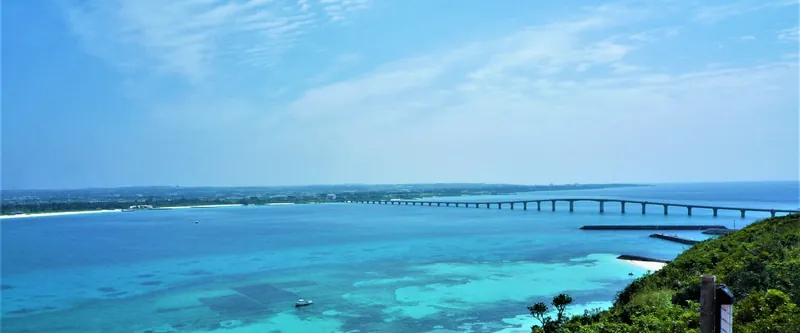
Yonaha Maehama Beach, Irabu Bridge, Cape Higashi-Hennazaki
Highs around 32°C. White sand beaches like Yonaha Maehama Beach dazzle
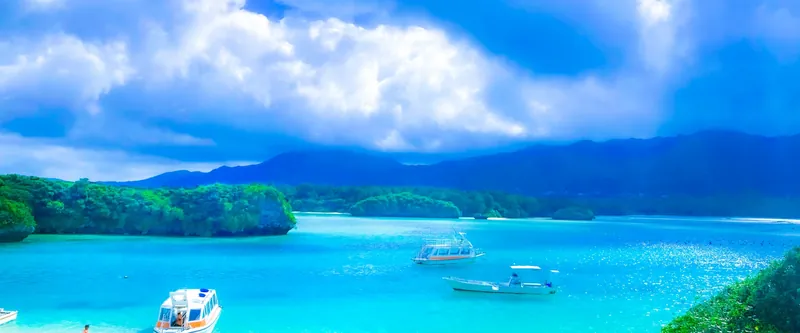
Kabira Bay, Ishigaki Port, Cape Tamatorizaki
Highs around 32°C. A season of beautiful starry skies
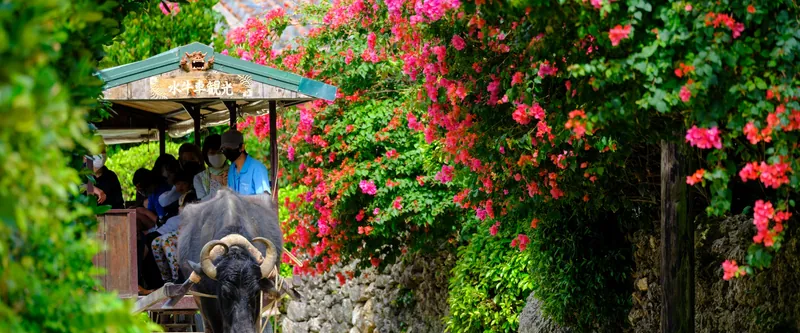
Iriomote, Taketomi, Yubu Island, Urauchi River
Sagaribana until around July. Go canoeing in the cool of the morning
When going in the sea, a rash guard and water shoes help protect you from sunburn.
Okinawa's summer sun is far more intense than in mainland Japan. Use a hat and sunscreen, and drink water often.
In the afternoon the sun is at its strongest and sudden showers are more likely. We recommend starting your beach time in the morning.
Typhoons can approach from the second half of July. Flights and ferries to the outlying islands may be suspended, so leave some slack in your plans.
Summer is habu jellyfish (box jellyfish) season. Swim at beaches with jellyfish nets or lifeguards.
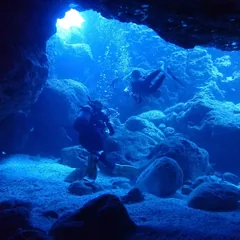
Lots of sunny days and very clear water. Enjoy snorkeling and diving.
Summer festivals and fireworks displays are held around the islands, sometimes with Eisa drum dance performances.
The Yaeyama Islands are one of Japan's top spots for starry skies. In summer, the Milky Way is clearly visible.
Dates change every year. Please check the official websites before you go.
In Naha, the average high is 31.9°C and the low is 27.0°C. It rarely goes above 35°C, but the strong sun and humidity make it feel hot.
Typhoons approach more often from the second half of July. Check typhoon tracks before and during your trip.
Summer clothes like short sleeves and shorts are the basics. A hat and rash guard for sun protection, and a light layer for air conditioning, are handy.
Source: Japan Meteorological Agency (climate normals 1991-2020). Compiled by tripuuu.log. Temperatures are from a representative station in each area; actual weather varies from year to year.